Real Los Angeles tattoo prices by size and style, plus how deposits, licensing, and studio type affect your quote. From artist Nadine Harvey.
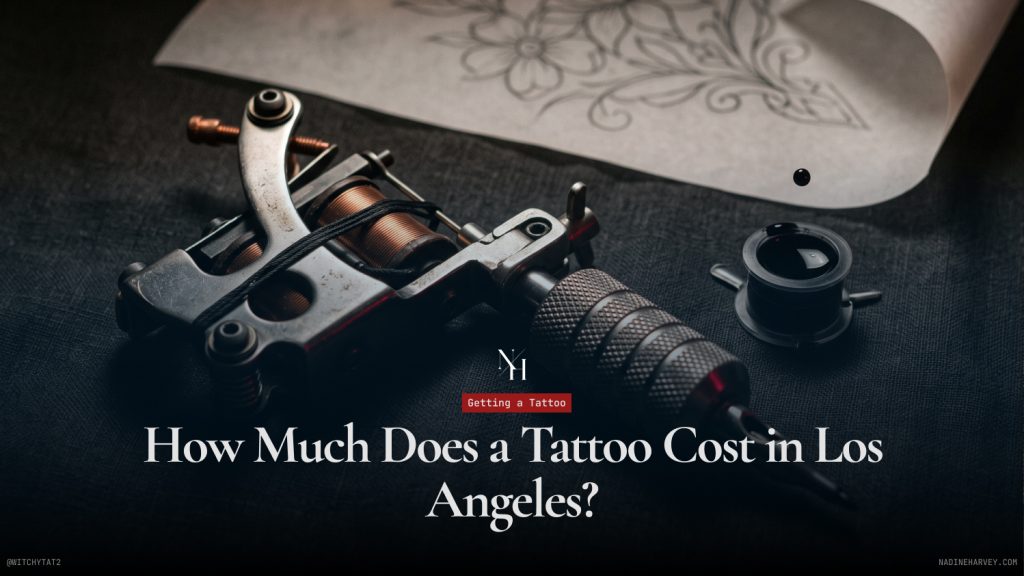
You want a straight answer before you book. Los Angeles tattoo prices range from about 100 dollars for a small piece to several thousand for a full sleeve. That gap confuses most first-time clients.
This guide breaks down real LA pricing by size and style. You will learn how deposits work and what actually drives a quote up. You will also learn why a private studio prices differently than a walk-in shop, and what licensing standards sit behind every honest quote in this city.
A small tattoo in Los Angeles runs 100 to 400 dollars. Medium pieces cost 300 to 900 dollars. Large custom work runs 800 to 2,000 dollars per session. A full sleeve or back piece runs 1,500 to 4,000 dollars or more across several sessions. Shop minimums sit between 80 and 150 dollars, even for a tiny design.
Nearly a third of American adults have a tattoo, according to Pew Research Center. That demand keeps LA’s market wide. It is also why prices vary so much from shop to shop.
Here is how the ranges typically break down.
| Size | Typical Range | How It Is Priced |
|---|---|---|
| Small, up to 3 inches | $100 to $400 | Flat rate |
| Medium, 3 to 6 inches | $300 to $900 | Flat rate or hourly |
| Large custom | $800 to $2,000 per session | Hourly or session rate |
| Full sleeve or back piece | $1,500 to $4,000 or more | Project quote across sessions |
| Shop minimum | $80 to $150 | Flat, any size |
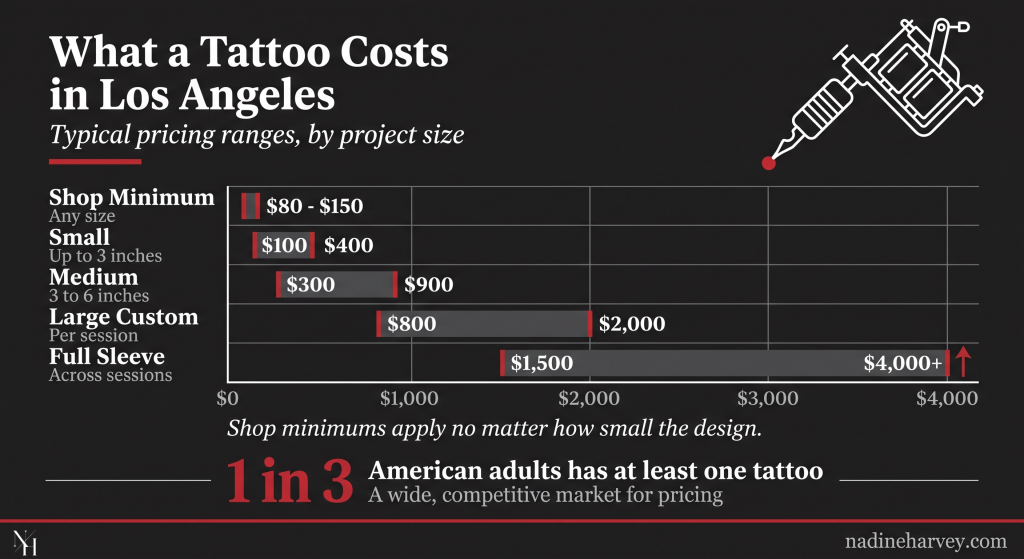
A shop minimum exists because setup costs stay the same for any small piece. Fresh needles, sterile ink caps, and a clean station cost the same for a one-inch design as a three-inch one.
Fine line and single-needle work, my main focus, often sits at the higher end of the small range. That style takes precision, not just time.
“Fine line looks simple, but it leaves no room for hesitation. Every pass has to be right the first time.” Nadine Harvey, Tattoo Artist
Medium and large pieces move into hourly or per-session pricing. The time becomes harder to predict once shading and detail enter the picture.
A palm-sized black and grey piece with real shading takes longer than a same-sized outline. You can see how that detail plays out in my tattoo portfolio.
Artists in Los Angeles price work three ways. Flat rate covers small, well-defined pieces where the time is predictable. Hourly rate covers custom work where the clock is harder to call. Day rate covers large sessions, usually four to six hours, at a set price instead of a running hourly total.
Each model fits a different kind of project. None is better. They match different amounts of uncertainty.
Flat rate works for flash designs, small lettering, and simple linework. You agree on a number before the needle touches skin. That is the number you pay.
Once a piece needs real design time or covers a larger area, hourly or day rate takes over. A client planning a half sleeve usually books a day rate session instead of a flat number. The final size and detail get refined during the design phase.
Ask for the full expected total, not just the rate. A good artist gives you a real number before you sit down.
Four things move a tattoo price the most. Style and detail level. Color versus black and grey. Placement on the body. How booked the artist already is. Two tattoos that look similar in a photo can land at very different prices because of these factors.
Knowing these variables helps you read a quote instead of just reacting to the number.
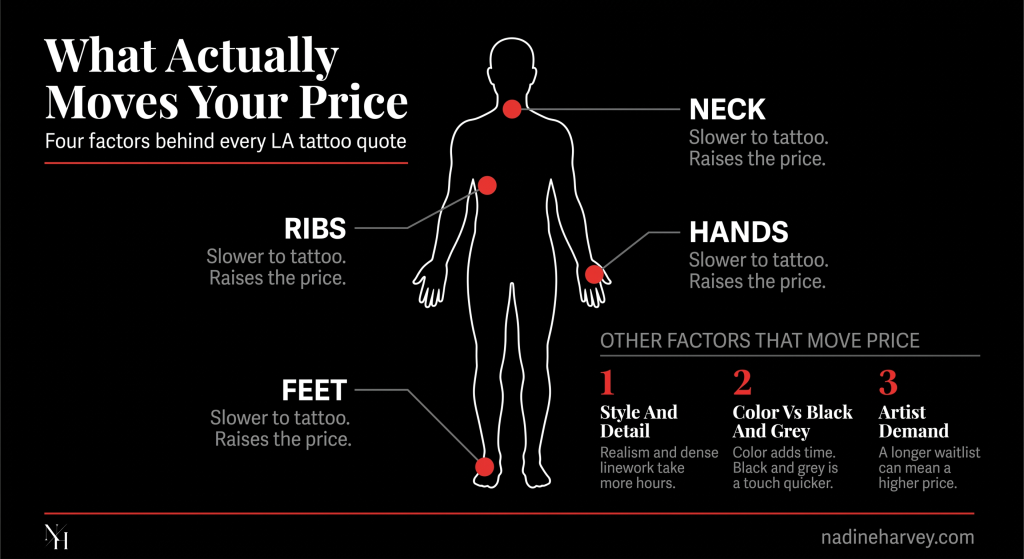
Realism and dense anime linework take more hours than bold, simple shapes at the same size. Color usually adds time too. It requires more layering than black and grey work.
Ribs, hands, feet, and necks take longer to tattoo well. Skin in these spots moves and stretches more. That slows the artist down and can raise the price.
The U.S. tattoo industry earns more than a billion dollars a year, according to IBISWorld. Tens of thousands of businesses compete for clients across the country. That competition is why price shopping alone can steer you wrong.
A deposit is not an extra fee. It reserves your appointment time and comes off your final price. Book a 400 dollar tattoo with a 100 dollar deposit, and you owe 300 dollars on the day. Deposits are usually non-refundable, but they carry over if you reschedule with enough notice.
A deposit protects the artist’s calendar. It holds your time, and it holds theirs.
When you pay a deposit, that slot is no longer offered to anyone else. If you no-show, the artist has lost paid work for that time. The deposit offsets that risk.
Most studios, including mine, ask for 48 to 72 hours notice to move an appointment. Give that notice, and your deposit rolls to the new date. It is a courtesy, not a fee to avoid.
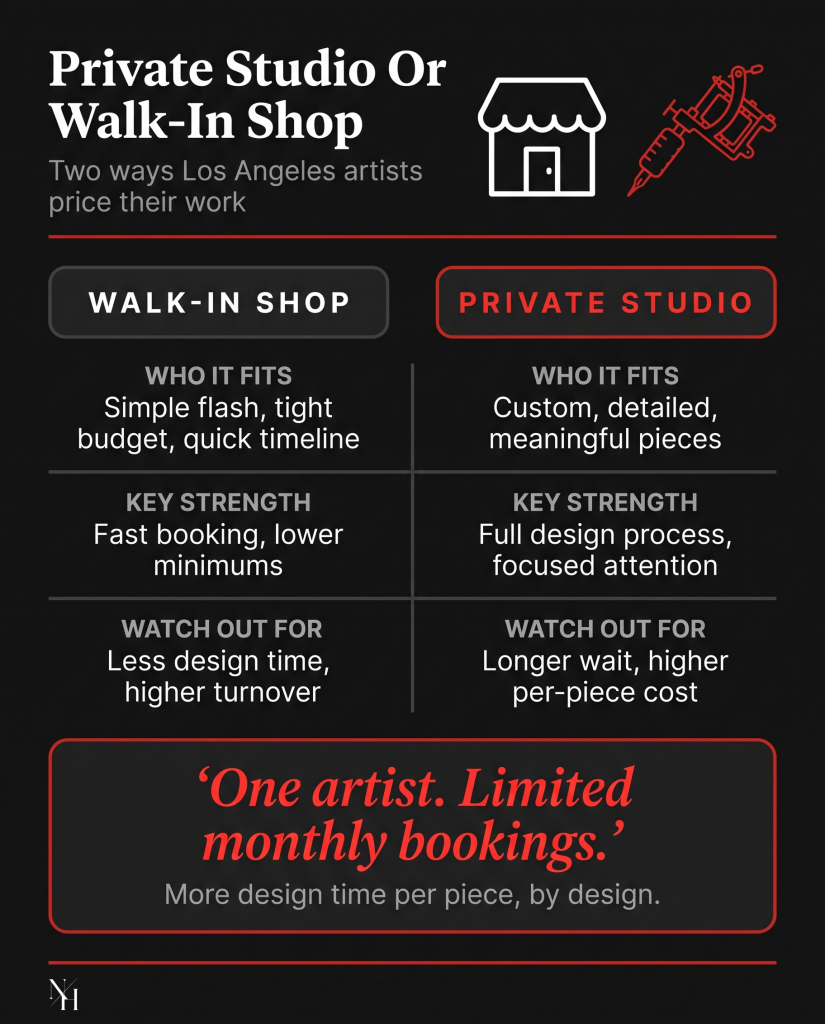
A private, appointment-only studio usually costs more per piece than a walk-in shop. You are paying for one artist’s full attention, a smaller client list, and design time built into the process. A walk-in shop moves faster and serves more clients. That keeps its average price lower.
I take a limited number of bookings each month. That scarcity is intentional, not a marketing line. Fewer clients means more design time per piece. The process moves slower and gets more thought.
You can read more about how I work on my about page.
“I would rather do fewer pieces and get the design right than fill a calendar with work I have not fully thought through.” Nadine Harvey, Tattoo Artist
| Model | Who It Fits | Key Strength | Watch Out For |
|---|---|---|---|
| Walk-in shop | Simple flash, tight budget, quick timeline | Fast booking, lower minimums | Less design time, higher turnover |
| Private studio | Custom, detailed, meaningful pieces | Full design process, focused attention | Longer wait, higher per-piece cost |
I have spent eight years building a practice around black and grey, fine line, anime, and horror work. Every piece is drawn by hand before it goes on skin. That hand-drawn process is part of what a private studio price reflects.
Every legal body art business in Los Angeles County must hold a Public Health Permit. The California Safe Body Art Act also sets minimum sanitation standards statewide. Part of what you pay for is that registration, sterile equipment, and a legally accountable studio. A price that seems too low sometimes means an artist is skipping one of these standards.
Safety standards rarely show up in pricing guides. In Los Angeles, they are part of the price.
The Los Angeles County Department of Public Health requires a permit for any body art business operating in the county. Artists must also register and complete bloodborne pathogen training.
This oversight sits at the state and county level. The FDA does not license individual tattoo artists or studios.
Ink quality is part of what a client pays for. The FDA finalized guidance on tattoo ink safety in October 2024. Manufacturers issued 18 recalls of contaminated tattoo ink between 2003 and 2024.
Research in the Journal of Law and the Biosciences found heavy metals like cadmium and lead in some tattoo inks. The Alliance of Professional Tattooists is one group pushing for stronger standards across the industry.
“Clients rarely ask where my ink comes from, but I wish more did. It is part of the job I take seriously.” Nadine Harvey, Tattoo Artist
Price is only one part of the decision. Size, style, artist experience, and studio type all shape the number on a quote. Now you know what each of those means.
If you are planning a custom piece, my process runs in four steps.
You can start that process on my booking page.
Most small tattoos cost 100 to 400 dollars, with shop minimums between 80 and 150 dollars.
Style, detail, placement, and how busy the artist already is all change the price, even for similar-looking work.
Usually not, but it carries over if you reschedule with enough notice, often 48 to 72 hours.
Yes. Every body art business in LA County needs a Public Health Permit under the California Safe Body Art Act.
Custom work includes design time before the tattoo even starts, on top of the tattooing itself.