
What makes a tattoo neo-traditional? See the four signs, the history, ideas that suit it, how it ages, and how to brief an artist.
Neo-traditional is easy to spot and hard to define. Search results use “neo-trad” for many different looks. According to the Pew Research Center, 32 percent of US adults have a tattoo and 22 percent have more than one.
This guide covers what defines the style, where it came from, and which ideas suit it. You will also learn how it ages and how to brief an artist. My own work is black and grey, fine line, anime, and horror. I wrote this so you can judge neo-traditional work, whoever you book.
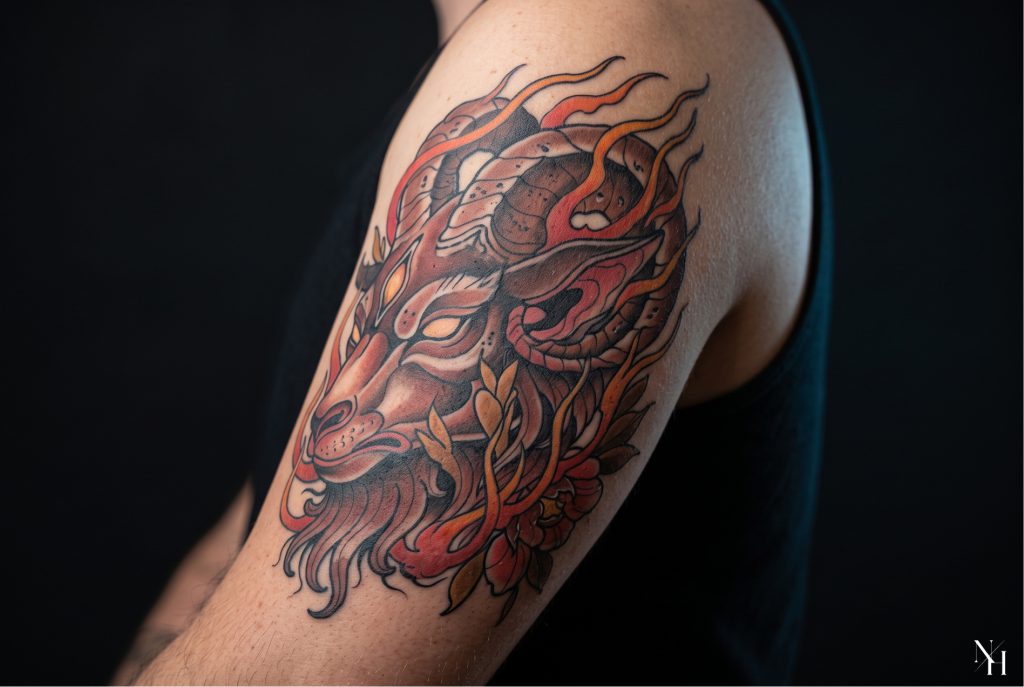
A neo-traditional tattoo keeps the bold black outline of American traditional work and adds more. It uses thick and thin lines, a wider color palette, and shading that gives depth. Subjects are richer, such as women’s portraits, animals, and flowers inside ornate frames. The result is an illustrated design, not a flat symbol.
Look for these four traits together.
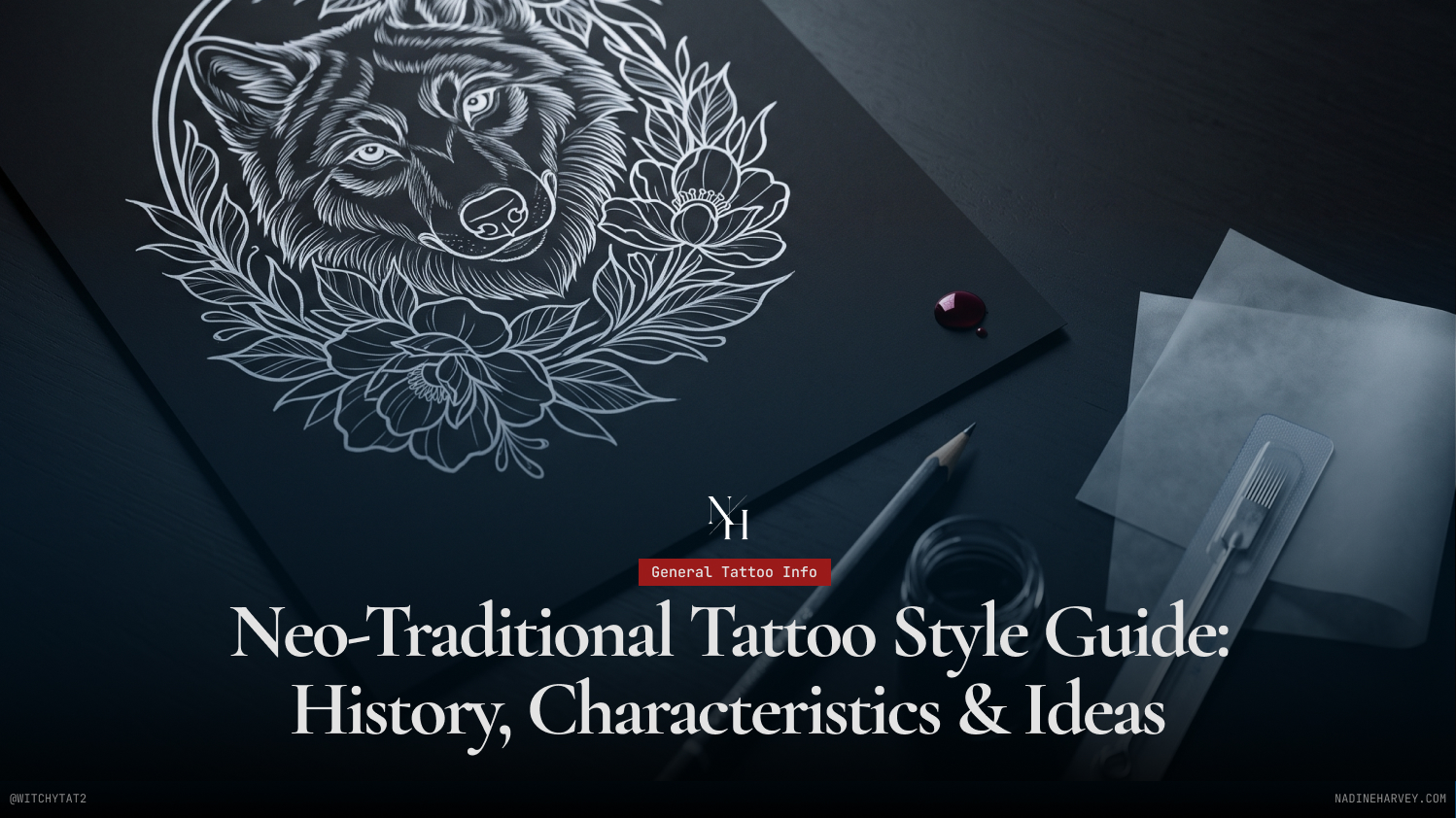
A wolf with a heavy outline, fine fur lines, teal and rust shading, and a floral frame shows all four signs.
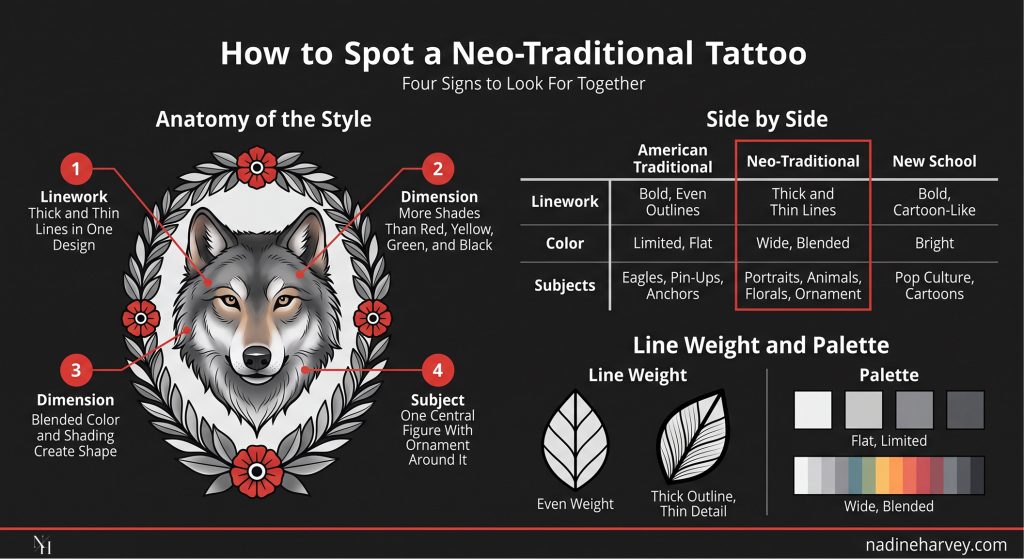
American traditional work uses bold black outlines and a limited palette. Neo-traditional adds detail. New school leans toward cartoons.
| Style | Linework | Color | Subjects |
|---|---|---|---|
| American Traditional | Bold, Even Outlines | Limited, Flat | Eagles, Pin-Ups, Anchors |
| Neo-Traditional | Thick and Thin Lines | Wide, Blended | Portraits, Animals, Florals, Ornament |
| New School | Bold, Cartoon-Like | Bright | Pop Culture, Cartoons |
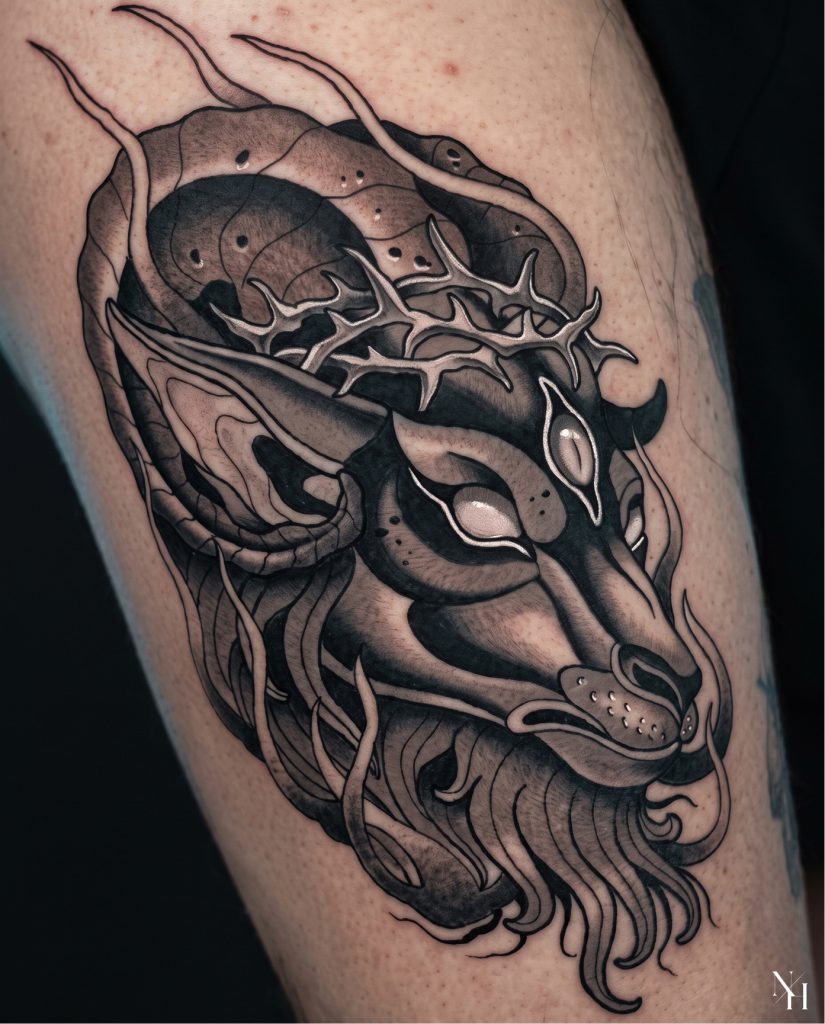
Yes. Women.com says the style works with or without color. Black and grey keeps the line and the depth. See my shading in the tattoo portfolio.
Neo-traditional developed from American traditional tattooing and Art Nouveau design. Art Nouveau drew on Japanese prints that reached Western markets in the 1860s. Poster artists such as Alphonse Mucha shaped its flowing look. No source agrees on when the tattoo style itself began.
The Metropolitan Museum of Art says Art Nouveau drew on japonisme, the Western interest in Japanese art. Tattoodo dates Art Nouveau from about 1890 to 1910. It adds that many neo-traditional tattoos echo Mucha’s posters.
Four trade sources give four answers. Their dates span three decades.
None names a founder. I treat the start date as unsettled.
Neo-traditional works best with one strong subject and room for detail. Popular choices include women’s portraits, animals, flowers, and mythical creatures in ornate frames. These designs often run larger than traditional ones, so the lines have space to flow. Match the size to the body area, and let the drawing follow the body’s curves.
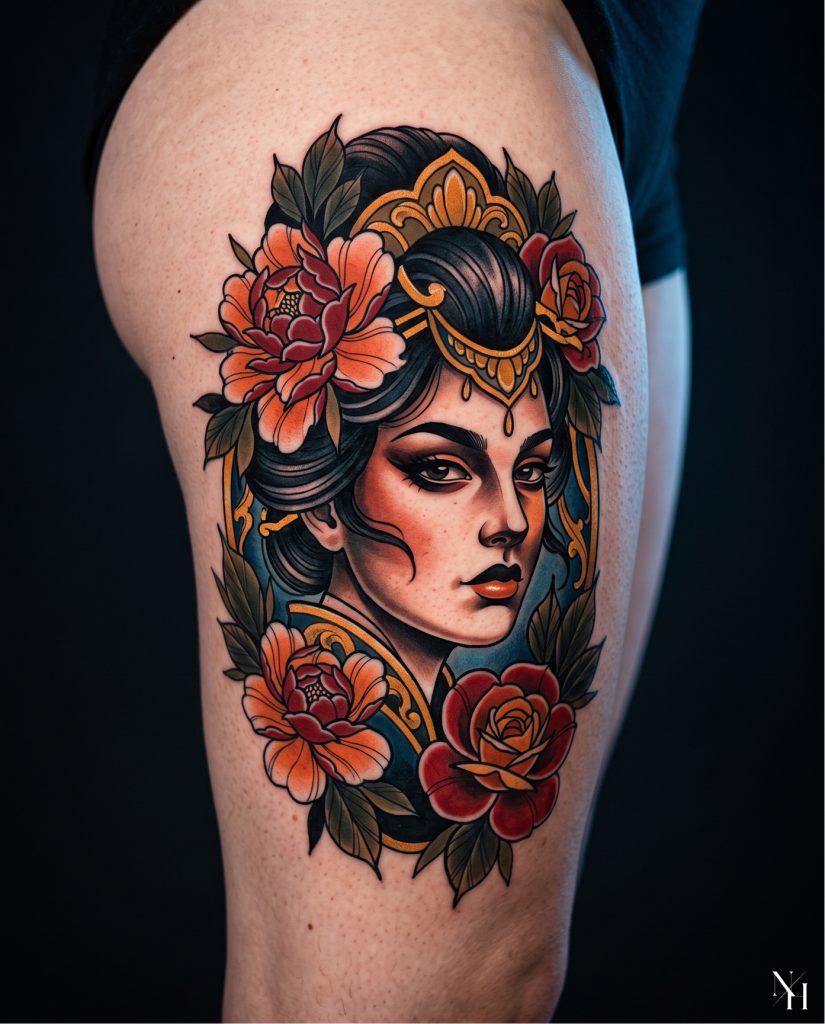
Pick one lead subject. Let the frame and color support it.
Neo-traditional artist Joe Frost says he draws everything from scratch with pencil and paper. I work the same way. Here is my process:
“I draw the piece by hand. You review before we ink.” Nadine Harvey, Tattoo Artist
Skin thickness changes by body area. CO:CREATE notes that ink placed below the dermis can spread and blur. Read my placement and pain guide before you choose a spot.
Sun protection is an easy first step to help a tattoo age well. The American Academy of Dermatology says UV light can fade some inks. It advises broad-spectrum, water-resistant sunscreen of SPF 30 or higher on healed skin. Size, placement, ink quality, artist skill, and aftercare also shape how any tattoo ages.
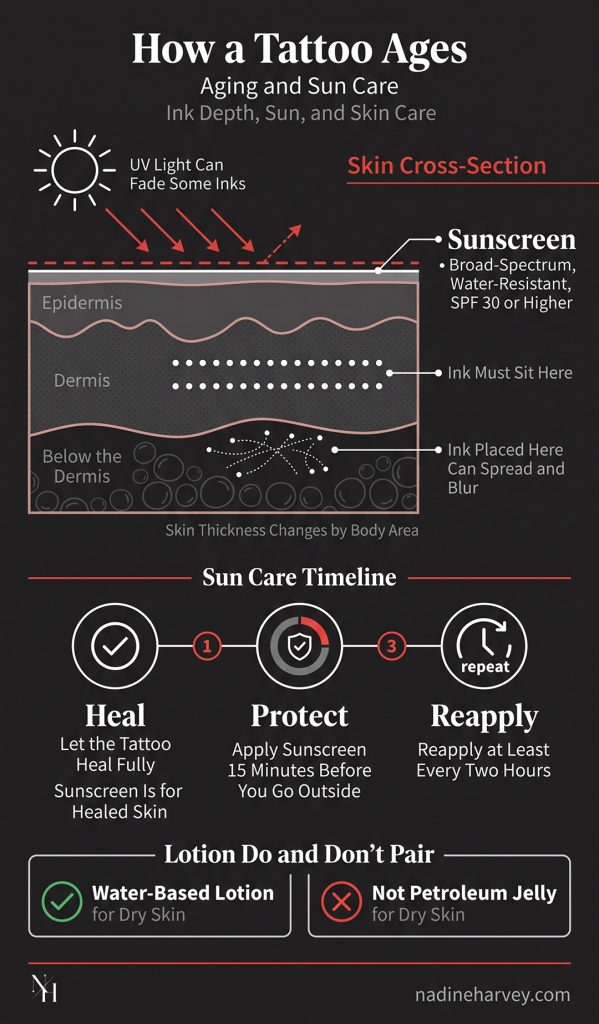
My red ink healing guide covers fading and healing in more detail.
Pew found that 24 percent of tattooed Americans regret at least one tattoo. Color often takes more laser sessions to remove than black, says Westlake Dermatology. Pick a design you want to keep for years.
That is the standard I work to:
“It’s built around your body, designed to last, and made by hand.” Nadine Harvey, Tattoo Artist
Send a clear brief and confirm the studio is permitted. Describe the look, the meaning, and the technique you want. Then check that your artist is registered and works in a permitted facility. California requires both. In Orange County, Orange County Environmental Health runs the program.
These steps follow CO:CREATE’s three-part method: aesthetic, iconography, and technique.
Ask yourself one question first. Do you like thick lines, thin lines, complex designs, or simple ones? Your answer narrows the style fast.
New to tattoos? Start with my first tattoo checklist. For portfolio checks, read my guide to choosing an artist.
The FDA treats tattoo inks as cosmetics. It issued a 2019 advisory on inks contaminated with microorganisms. That is why ink sourcing matters.
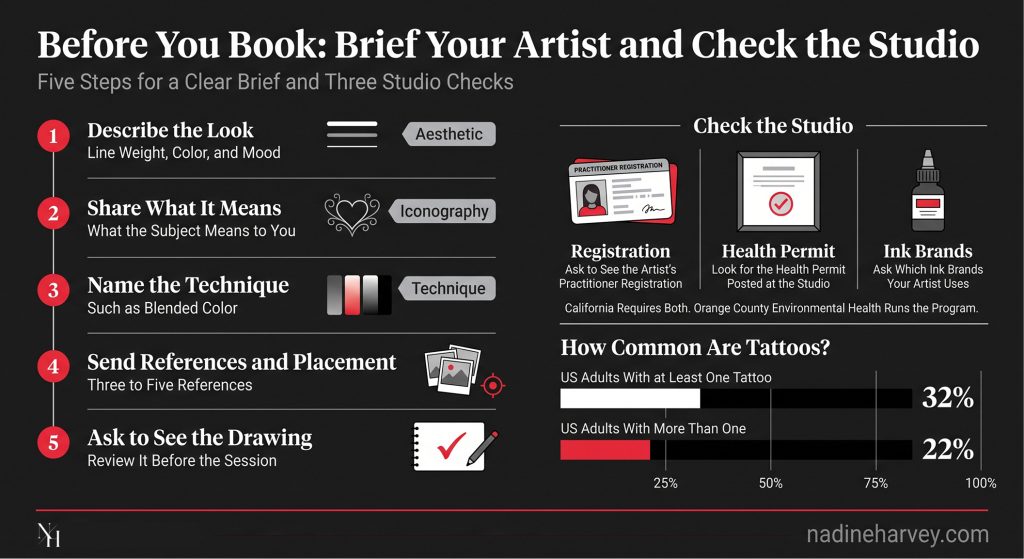
The EU restricted two blue and green pigments in 2023. That rule does not bind US studios.
Studio standards matter to me:
“I would rather my clients get tattooed in a safe and sterile environment by a professional artist.” Nadine Harvey, Tattoo Artist
This guide is general information, not medical advice. See a board-certified dermatologist if your tattoo reacts.
Neo-traditional keeps American traditional’s bold outline and adds line variety, wider color, and depth. Know the four signs, protect the tattoo from sun, and send a full brief. Confirm the studio’s permit and your artist’s registration before you book.
If your idea fits black and grey, fine line, anime, or horror, send a message through the booking form. You can also read more about me first.
Bold black outlines, varied line weights, a wider palette, and shading for depth. Subjects are richer than in American traditional work.
No. Neo-traditional draws on art movements such as Art Nouveau. New school leans toward cartoons and pop culture.
No. It works in black and grey with the same line and depth.