Learn how to transform, cover, or fade an old tattoo. Nadine Harvey explains cover-up design rules, the process, and how to choose a safe artist.
About 24% of tattooed Americans regret at least one tattoo, according to Pew Research Center. If that is you, you are not stuck. Most old tattoos can be reworked, covered, or faded.
This guide shows how I read an old tattoo and choose a path. You will learn the three options, the designs that hide old ink, and how to check an artist’s safety.
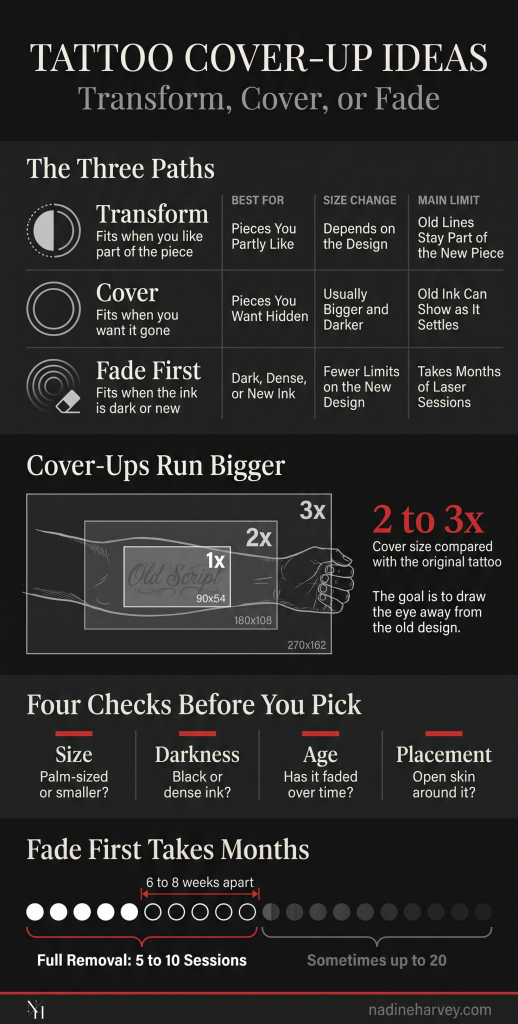
Most old tattoos can be covered, but size, darkness, age, and placement set the limits. Faded, small, light tattoos are easiest. Solid black pieces and tattoos with little free skin around them are hardest. I check these four traits first, because they decide how big and dark the new design must be.
In eight years of tattooing in Southern California, I have started every cover-up consultation with the same four checks. You can run them yourself in a minute.
“I ask for a photo of the old tattoo before I sketch anything. Its darkness and placement shape the design more than the subject does.” Nadine Harvey, Tattoo Artist
Regret often arrives slowly. A 2023 Advanced Dermatology survey found that 51% of people with tattoo regret did not feel it for two or more years. Almost half said the tattoo was a spontaneous choice.
That is one reason I draw every design by hand and review it with you before ink touches skin.
Transform keeps parts of the old tattoo and builds on them. Cover hides it under a larger, darker design. Fade uses laser to lighten the old ink first, which opens more design choices. Transform fits when you like part of the piece. Cover fits when you want it gone. Fade fits when the ink is dark or new.
| Path | Best for | Size change | Main limit |
|---|---|---|---|
| Transform | Pieces You Partly Like | Depends on the Design | Old Lines Stay Part of the New Piece |
| Cover | Pieces You Want Hidden | Usually Bigger and Darker | Old Ink Can Show as It Settles |
| Fade First | Dark, Dense, or New Ink | Fewer Limits on the New Design | Takes Months of Laser Sessions |
UCSF Health says full laser removal takes 5 to 10 sessions, and sometimes up to 20. Sessions are spaced 6 to 8 weeks apart. Fading for a cover-up is partial, so the count is lower, but it still takes months.
Dermatologist Dr. Bobby Buka says in a Zocdoc guide to removal that removal is never a single visit. Laser belongs with a doctor. The American Academy of Dermatology advises a board-certified dermatologist.
LovelySkin cites a dermatologist who says a cover-up can make later laser removal harder. Weigh that before you decide, especially if you may want laser later.
Dense, dark designs with strong texture hide old ink best. A bold focal point draws attention away from the old lines. Expect the new tattoo to be bigger and darker than the original. Heavy shading, horror, and black and grey styles suit full coverage. Fine line suits small refreshes.
Tattoo artist Amanda Graves says a cover should run two to three times the original size. Her goal is to draw the eye away from the old design.
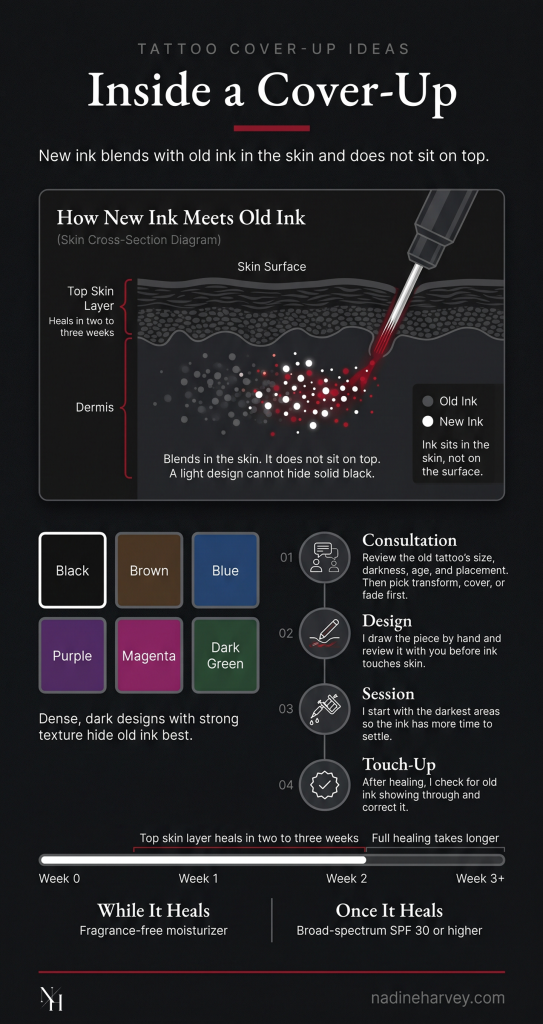
Color matters too. New ink blends with old ink in the skin and does not sit on top. Painful Pleasures lists black, brown, blue, purple, magenta, and dark green as the colors that cover best.
Picture a faded script name on a forearm. A black and grey realism piece or a horror illustration can sit over it.
“I put dense shading over the old lettering and place the focal point away from it. The eye lands on the new subject first.” Nadine Harvey, Tattoo Artist
Now picture a small, light, faded symbol. A fine line rework may be enough there, and the piece does not need to grow.
A cover-up has four stages. First we talk. Then I draw a custom design by hand. Next comes the tattoo session. After healing, you return for a touch-up. Some cover-ups need more than one session. Old ink can show as the new piece settles.
“After a cover-up heals, I check the darkest areas for old ink showing through. A touch-up session corrects it.” Nadine Harvey, Tattoo Artist
Removery’s guide estimates that the top skin layer heals in two to three weeks. That figure comes from a laser clinic, so treat it as a rough guide. Full healing takes longer.
Use fragrance-free moisturizer while the tattoo heals. Once it heals, apply broad-spectrum SPF 30 or higher. Modern Salon reports that 42% of Americans skip sunscreen on their tattoos.
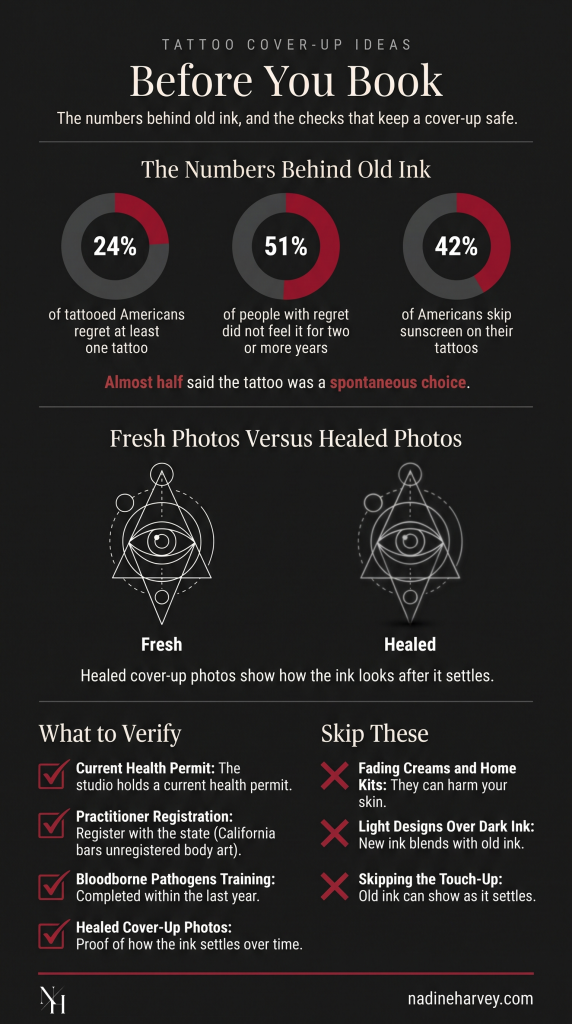
A safe cover-up artist shows healed cover-up photos and holds a current body art registration. The studio holds a health permit. The artist has bloodborne pathogens training from the past year. You can check all of this with your local health agency before you book.
Fresh photos look sharp. Healed photos show how the ink looks after it settles and softens. Experience with cover-ups matters as much as style, and you can see how I handle dark shading and focal points in my healed and finished work in the tattoo gallery.
The FDA says it has not approved any pigment for injection into skin. State and local authorities oversee tattooing.
Skip fading creams and home kits. The AAD warns that they can harm your skin.
Most old tattoos can be transformed, covered, or faded. Size, darkness, age, and placement decide which path fits. Expect a larger, darker design and a touch-up after healing. Choose an artist who holds a current registration and shows healed cover-up photos.
If you want a clear read on your tattoo, send photos through my booking page. I will tell you which path fits and what to expect.
Rarely. New ink blends with old ink, so a light design will not hide solid black. Fading first or choosing a darker design usually works better.
It depends on size and detail. Some need more than one session, and healing adds weeks. I outline the plan at your consultation.
Often, yes. Size, detail, and planning add time. I quote after I see the old tattoo.
Often, yes. Faded or lighter tattoos usually need no laser. Dark, dense, or new ink may need fading first.