Learn how to draw tattoo designs from tattoo artist Nadine Harvey. Get the tools, steps, and studio insight beginners need to build a stencil ready design.
Learning to draw a tattoo design is different from learning to draw. A design has to survive years on skin. It has to hold up to movement, sun, and time, not just look good on paper today.
This guide breaks the process into clear steps. You will learn what tools to use, how to practice, how to build a stencil ready design, and what actually happens during a real consultation.
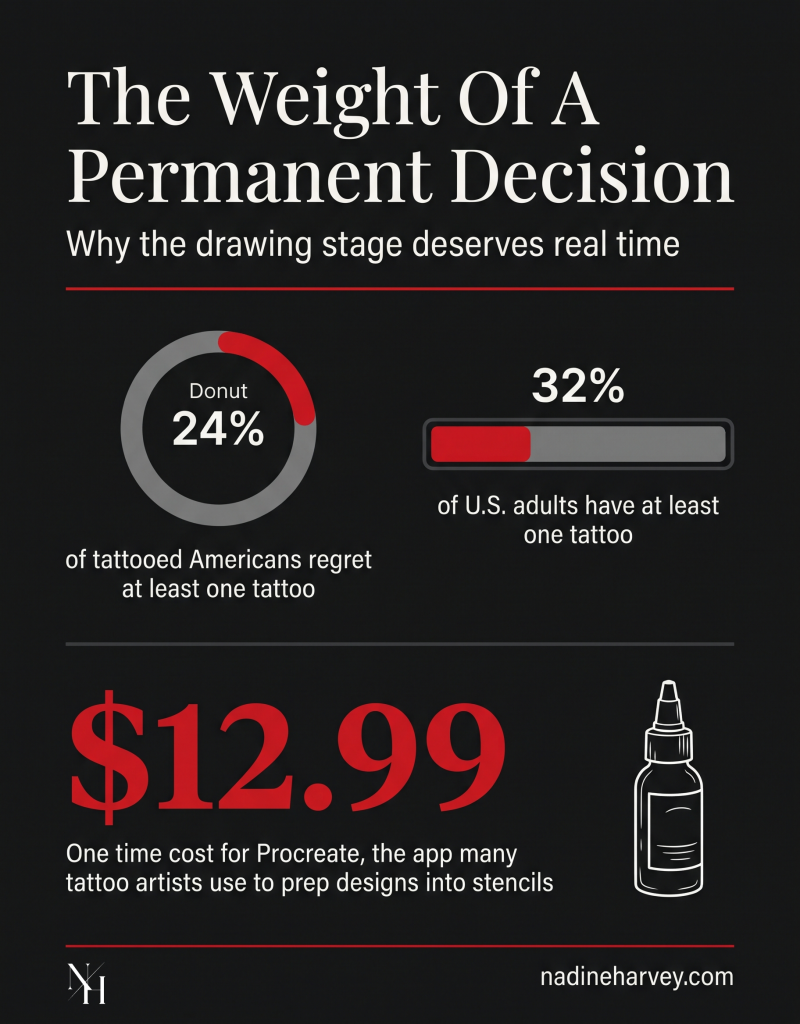
A hand drawn tattoo design lasts longer because the artist controls line weight, spacing, and flow before ink ever touches skin. Traced or AI generated designs skip that step. About 24% of tattooed Americans regret at least one tattoo, according to Pew Research Center. Careful drawing is the best way to avoid becoming part of that number.
Pew Research also found 32% of American adults have at least one tattoo. Getting a design right matters at that scale.
A rushed sketch can turn into years of regret. That risk is exactly why the drawing stage deserves real time.
I have drawn every tattoo by hand for eight years. That habit started before I fully understood why it mattered so much.
“Ink touches skin only after the design earns it.” Nadine Harvey, Tattoo Artist
I got my first tattoo young, and it changed my whole path, a story I shared with Voyage LA. That moment still shapes how I draw today.
Most beginners need a sketchbook, a few pencils, and one solid drawing app. Procreate costs a one time $12.99 and works as the tattoo industry’s standard app, according to Journal. Pair digital practice with daily hand sketching. Tools matter less than repetition. Skill comes from hours spent drawing the same shapes until they feel natural.
Tattoo artist and illustrator Jordan Mitchell says formal figure drawing training reshaped how he approaches tattoo design, according to 99designs.
Renowned artist Filip Leu learned to scale small flash designs by copying them box by box using a grid, according to Open Transcripts. Both point to the same lesson. Strong basic drawing skill comes before strong tattoo design.
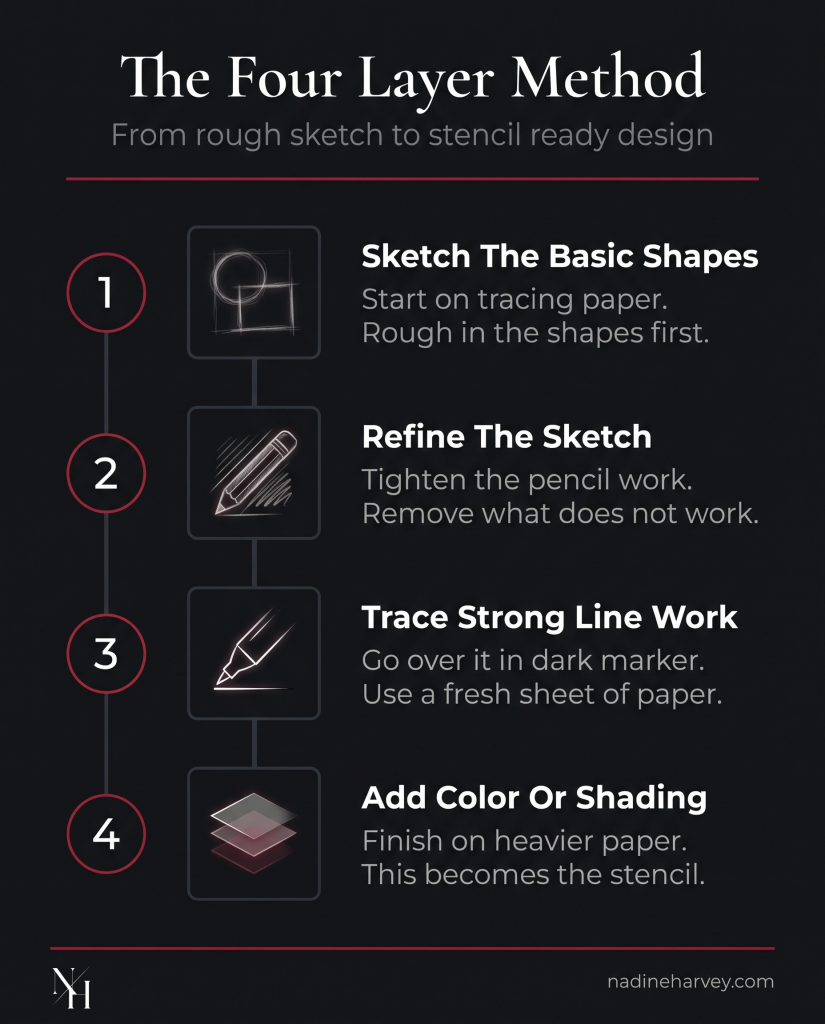
A tattoo ready design moves through four stages. Start with a rough shape sketch on tracing paper. Tighten it into a clean pencil sketch. Trace strong line work in dark marker. Finish with color on heavier paper. This four layer method, outlined by Tattooing 101, keeps each stage focused and easy to fix.
“I leave room for a 7 mag between every line. Tight linework is the first thing that blurs after a few years.” Nadine Harvey, Tattoo Artist
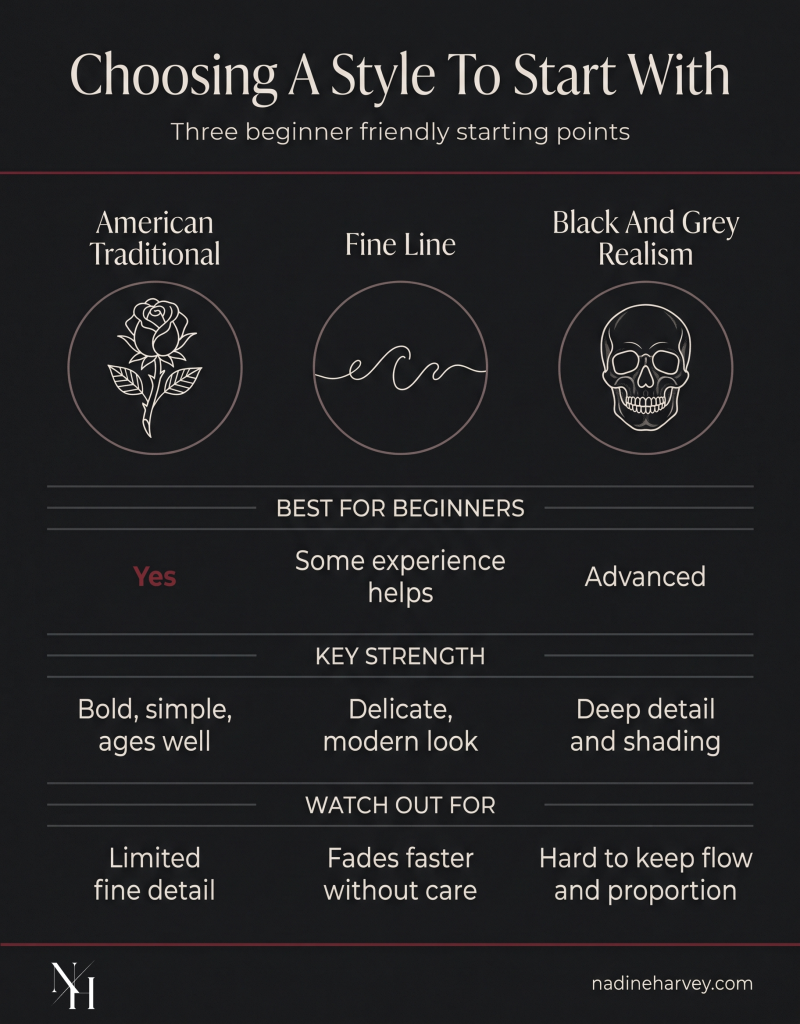
American traditional style works best for most beginners. It uses one line weight and flat color, according to Tattooing 101. A design also has to fit the body part it is drawn for. A flat sketch can look stretched once it wraps around an elbow or shin. Flow matters as much as clean lines.
| Style | Best For Beginners | Key Strength | Watch Out For |
|---|---|---|---|
| American Traditional | Yes | Bold, simple, ages well | Limited fine detail |
| Fine Line | Some experience helps | Delicate, modern look | Fades faster without care |
| Black And Grey Realism | Advanced | Deep detail and shading | Hard to keep flow and proportion |
A design that follows the body’s natural curves still looks good, even with small tattooing flaws. A design that ignores flow looks off no matter how clean the lines are.
“I trace the muscle line before I sketch a single detail. The design has to sit right on the body first.” Nadine Harvey, Tattoo Artist
A real consultation starts with a conversation, not a drawing. I ask about placement, story, and any tattoos already nearby. Tattoo artist Fernando Morales Unda treats every piece as a way to tell a client’s personal story, according to Medium. Bring reference photos or a rough idea. I handle the final drawing.
You can bring your own sketch. I use it as a starting point, not a stencil.
Line weight and spacing often need adjusting for skin. If you are ready to talk through your idea, you can book a consultation directly.
Drawing a tattoo design takes patience and the right process. Start with practice, learn the four layer method, and think about flow before you think about detail.
If you want to see this process in action, look through my tattoo portfolio or read more about my approach to custom work. Once your design is healed, our aftercare guide covers how to protect it long term.
When you are ready for a custom piece, you can always reach out to book a spot.
Yes. You need to draw clean, accurate lines before you tattoo them on skin.
Procreate is the most common choice, thanks to its layering tools and low one time cost.
You can use one for inspiration. A licensed artist should still redraw it by hand to fit your body and skin.
It varies widely. Daily practice for a few months builds a solid foundation for simple designs.