A plain guide to tattoo shading techniques for beginners. Learn whip, pendulum, stipple, and cross shading, how shading ages, and how to choose the right artist.
You saw a tattoo with soft, smooth shadows and wondered how it was made. Maybe you are planning your first piece and want to speak your artist’s language. Shading is the part that turns a flat outline into something with real depth.
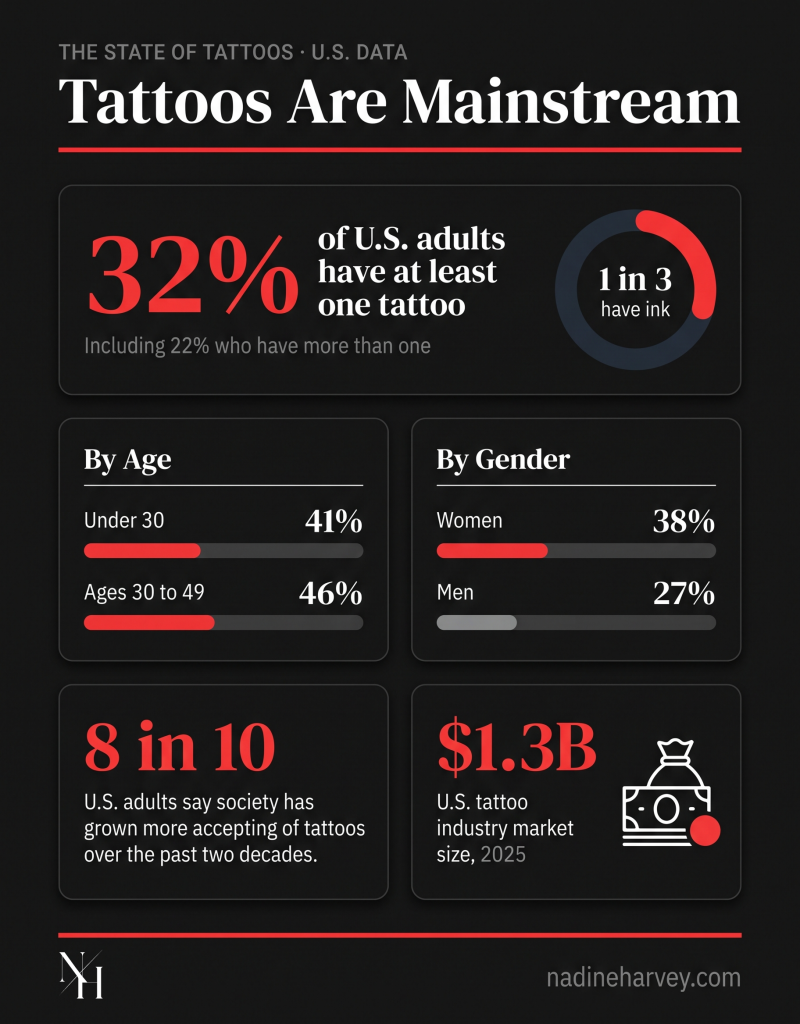
This guide breaks shading down for people getting tattooed, not for artists holding the machine. Tattoos are common now. About 32 percent of US adults have at least one, so this is a normal choice. You will learn the main techniques, how black and grey differs from color, how shading ages, and how to pick someone who does it well.
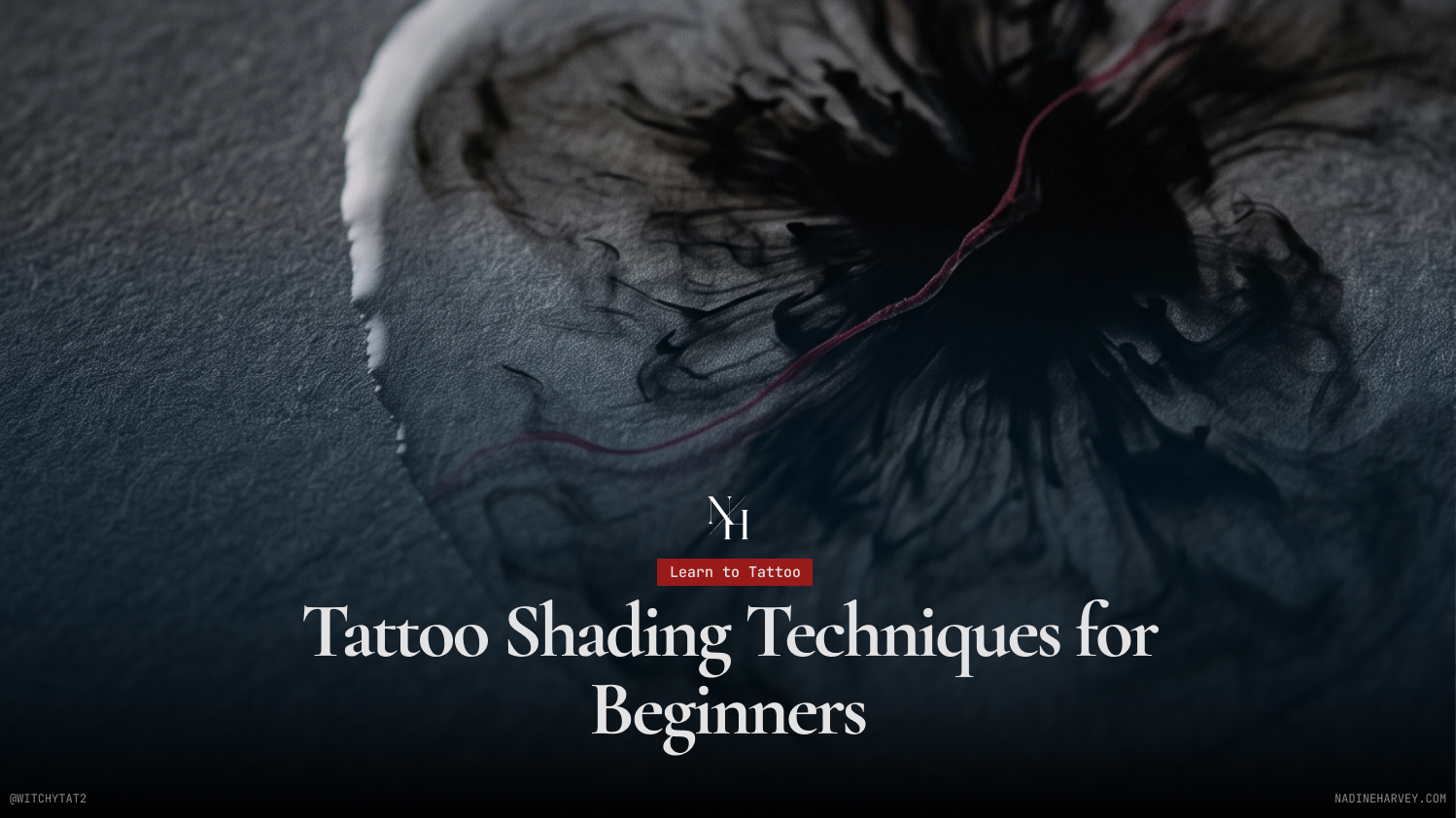
Shading is the controlled placement of ink to create tone, depth, and texture. Linework draws the shape. Shading fills it with light and shadow. Artists change needle speed, pressure, and ink strength to build smooth fades or grainy texture. Done well, shading makes a flat design look three-dimensional on your skin.
Think of a pencil sketch. The outline shows the object. The shading shows where light falls and where shadow sits. A tattoo works the same way.
Packing is not the same as shading. Packing means forcing solid, even ink into an area for a bold fill. Shading is about the transition from dark to light. Both matter, but they serve different goals.
Shading asks for a steady hand and good judgment. The ink has to land in a narrow band of skin. Too much pressure and it heals harsh. Too little and it fades. This is what separates a decent tattoo from a great one.
Most shading comes from four core techniques: whip, pendulum, stipple, and cross shading. Whip shading fades from dark to light with a flicking motion. Pendulum shading sweeps side to side for even tone. Stipple builds tone with tiny dots. Cross shading layers strokes in different directions. Each creates a different look.
You will not run a machine yourself. But knowing these names helps you describe what you want.
| Technique | Best For | What It Looks Like | Good To Know |
|---|---|---|---|
| Whip shading | Smoke, clouds, soft shadows | Smooth fade from dark to light | The most common all-round method |
| Pendulum shading | Large fills, realism backgrounds | Even, seamless tone | Great for wide, smooth areas |
| Stipple (pepper) | Blackwork, texture, grain | A peppery, dotted texture | Slower, but very controlled |
| Cross shading | Illustrative, drawn styles | A sketched, crosshatch look | Adds a hand-drawn feel |
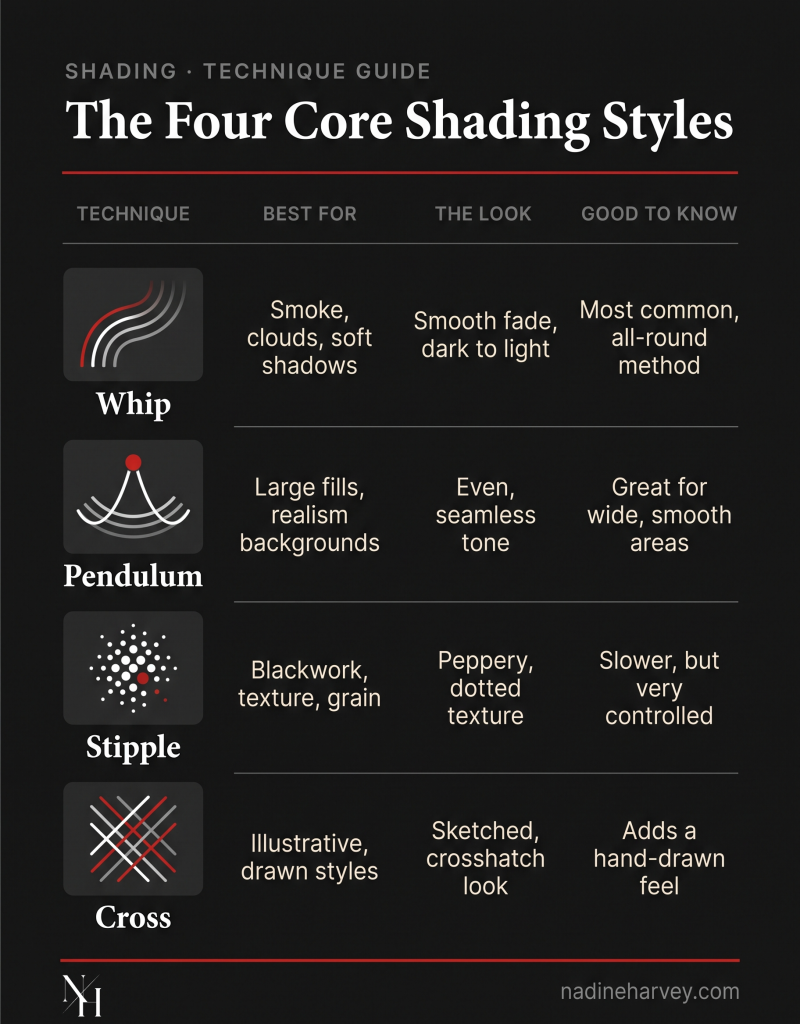
Whip and pendulum give you soft, blended results. Stipple and cross give you visible texture. Your artist often mixes several in one piece. A single flower can use three or four.
Realism and portraits lean on smooth whip and pendulum work. Bold blackwork and geometric pieces use stipple and cross shading. If you are unsure, bring reference photos to your consultation. Your artist will guide the choice.
Black and grey shading uses only black ink, thinned into soft grey tones. Color shading blends pigments for gradient and glow. Black and grey suits realism, portraits, and moody pieces, and it ages in a calm, steady way. Color is bolder but asks more of your skin and your aftercare. Your design decides which fits.
Black and grey is the most popular shading path. It is also the base of my black and grey realism work. I have spent eight years learning how grey tones settle and last.
“I build grey in thin layers so it stays soft and readable years later, not just on day one.” Nadine Harvey, Tattoo Artist
Grey wash relies on tone, not bright pigment. As a piece softens over the years, the gradients stay readable. That is part of why realism artists favor it for long-lasting work.
Tell your artist the mood you want. Soft and dreamy points to smooth grey work. Sharp and graphic points to bold blackwork. Clear words help more than technical terms.
Shading lasts when ink lands in the dermis, the middle skin layer about 1 to 2 millimeters deep. Too shallow and it fades within weeks. Too deep and it blurs into a blowout. Immune cells called macrophages trap the ink and hold it for years. Over time, some pigment scatters, so shading softens a little.
This is the science behind good work. Ink placed in the dermis stays stable while the top layer sheds. The outer skin renews about every 28 days, so shallow ink does not last.
“Depth is everything with shading. Land it right in the dermis and it holds. Push too hard and it heals patchy.” Nadine Harvey, Tattoo Artist
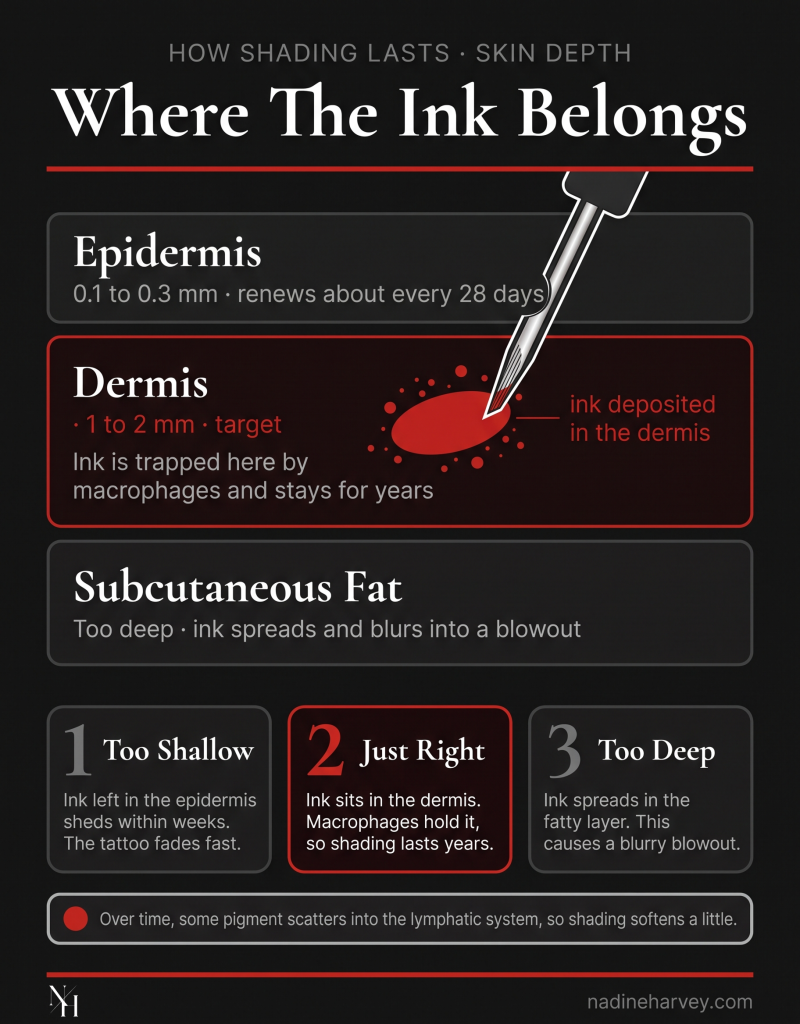
Your body treats ink as a foreign particle. Research in the Journal of Experimental Medicine showed that macrophages capture ink and pass it on as they die. A UCSF science team notes that tattoo ink resists the immune system’s usual cleanup. That is why your tattoo stays put.
A few common problems shorten the life of shaded work:
Shading feels different from linework, not always worse. Many people describe it as a duller, warmer scratch instead of a sharp line. Larger shaded areas take longer, so sessions run longer. Softer skin, like the inner arm or ribs, feels more tender. Knowing this ahead of time helps you plan breaks and pace.
First-timers often fear the pain more than they should. Shading is usually gentler than outlining, just more repetitive.
Say you book a shaded forearm piece with me. I draw the design by hand first. Then I line it and build the grey tones in layers. You feel the buzz shift to a softer, warmer sensation. The session takes a few hours, with short breaks.
Choose an artist by studying healed shading, not fresh photos. Fresh work looks crisp on almost everyone. Healed work shows whose shading stays smooth after a year. Ask to see older pieces. In California, confirm the studio follows the Safe Body Art Act, which means county registration and yearly bloodborne pathogen training.
Shading is a real skill, and the field is professional. The US tattoo industry reached about 1.3 billion dollars in 2025. Skilled artists build their names on consistent, healed results.
“Ask to see healed work. Fresh shading looks good on anyone. Healed shading shows who really controls it.” Nadine Harvey, Tattoo Artist
California law protects clients. Under the Safe Body Art Act, every tattooer must register with the county and train in bloodborne pathogen safety each year. Your consent form will also note that tattoo inks are not FDA approved. A good studio explains all of this without being asked. You can book a consultation with Nadine to see her healed work in person.
Shading is what gives a tattoo depth, softness, and life. You now know the main techniques, how black and grey differs from color, and why good shading lasts. You also know what a session feels like and how to spot a skilled artist.
Your next step is simple. Gather reference photos of shading you love. Then find an artist whose healed work matches that look. If you want soft black and grey realism in Southern California, learn more about my approach and my hand-drawn process.
Usually no. Many people find shading feels like a duller, warmer scratch. It is more repetitive than the outline, so larger areas simply take longer.
It can look softer over time. Shading relies on light tones, so gentle grey areas mellow first. Good depth control and sun protection keep it looking clean for years.
Most tattoos heal on the surface in about two weeks. Deeper settling takes a few months. Follow your artist’s aftercare advice to protect the tone while it heals.
Often yes. Many artists add shading to give an old, flat tattoo more depth. Bring the piece to a consultation so the artist can assess the existing ink.