Learn what tattoo flash art means, how artists build flash sheets step by step, and how flash works across fine line, anime, and black and grey styles.
You see the word flash on a studio wall or on an artist’s Instagram. You are not sure what it means, or if it fits your next tattoo.
This guide breaks down what flash art is and where the word came from. You will see how an artist builds a flash sheet from a blank page to a finished design. You will also learn how flash fits modern styles like fine line and black and grey. And you will learn what standards sit behind every flash tattoo.
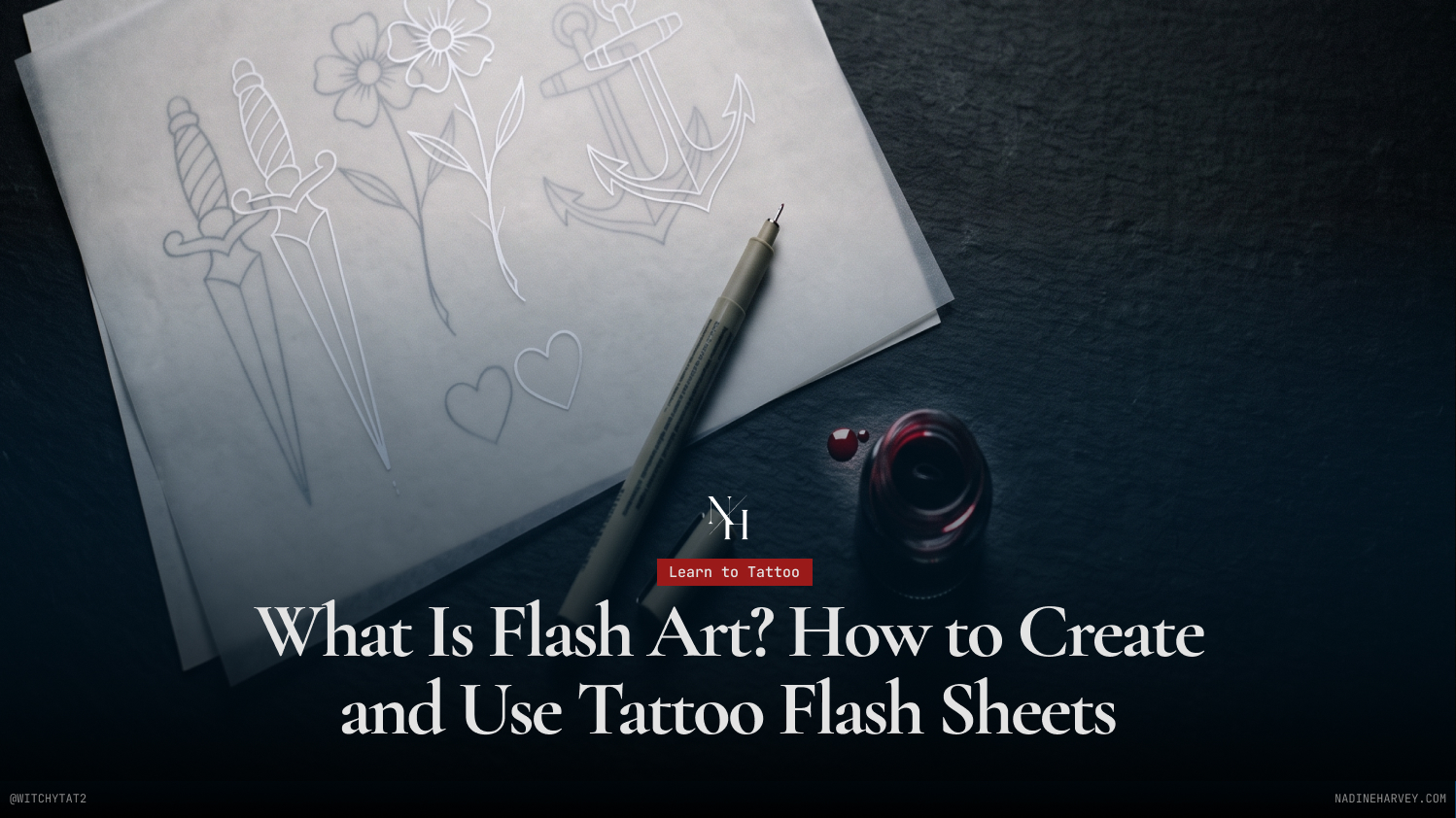
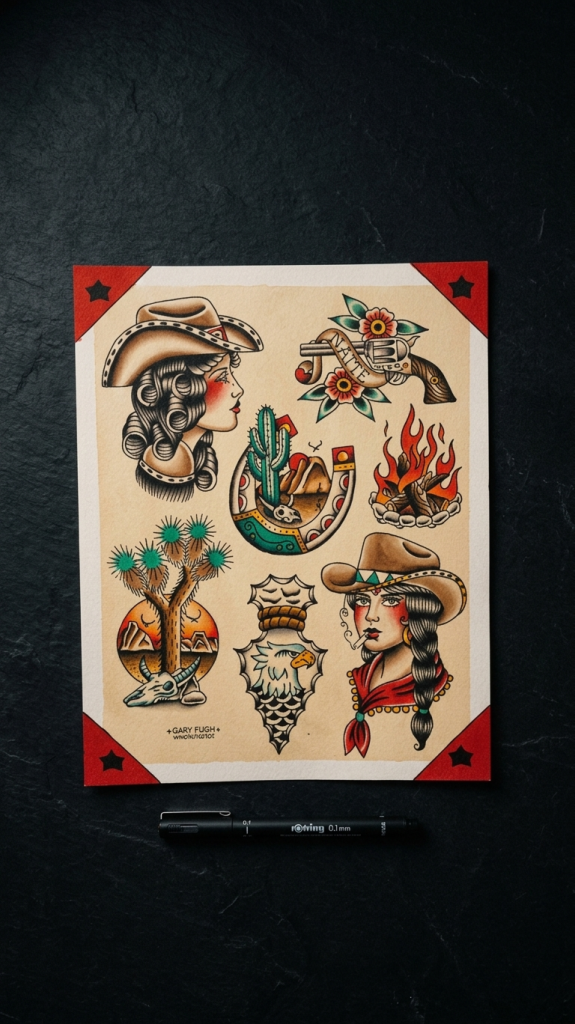
Flash art is a tattoo design an artist draws ahead of time. It is ready to ink without a custom design session. The word comes from carnival and circus slang from the late 1800s. Back then, flash meant anything eye catching enough to pull a crowd, per Wikipedia’s history of tattoo flash. Today it still means a ready made design a client can choose and book right away.
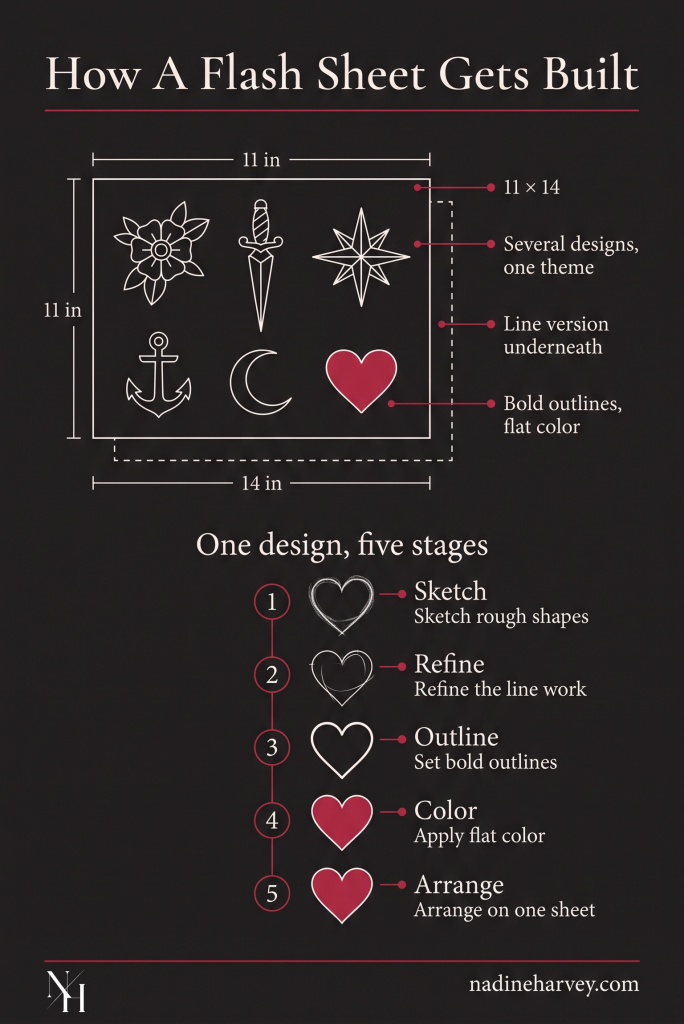
A flash sheet holds several flash designs on one page. The designs usually share one theme, like flowers, animals, or symbols. Most sheets follow an 11 by 14 inch size in North America.
Many sheets come with a plain line version underneath. This lets the artist build a stencil without redrawing anything.
“I draw every flash design the same way I draw a custom piece. It still starts on paper, not on skin.”
Flash has a longer history than most people expect. Tattoo historian Matt Lodder studies this history closely. He notes that by the 1880s, most port cities already had tattoo artists. These artists served a wide range of clients, including wealthy ones, per Collectors Weekly.
Flash was never just a budget option. It was a working artist’s way to show style fast.
Flash used to live only on shop walls and in binders. Now it also lives online, shared as photos or digital files before a client ever steps into a studio. The format changed. The idea behind it did not.
Market flash is a design an artist tattoos on many different clients. Collector flash works differently. An artist creates it once, shares it, and tattoos it on the first person who books it. After that, the design retires for good. Knowing which type you are looking at changes what you should expect once it is on your skin.
Both types start from the same process. The difference is what happens after the design is finished.
| Type | Who It Fits | Key Strength | Watch Out For |
|---|---|---|---|
| Market Flash | Clients who want a simple, proven design | Easy to book, no design wait | Others may have the same tattoo |
| Collector Flash | Clients who want a piece with a story | One of a kind, tied to one release | Limited availability |
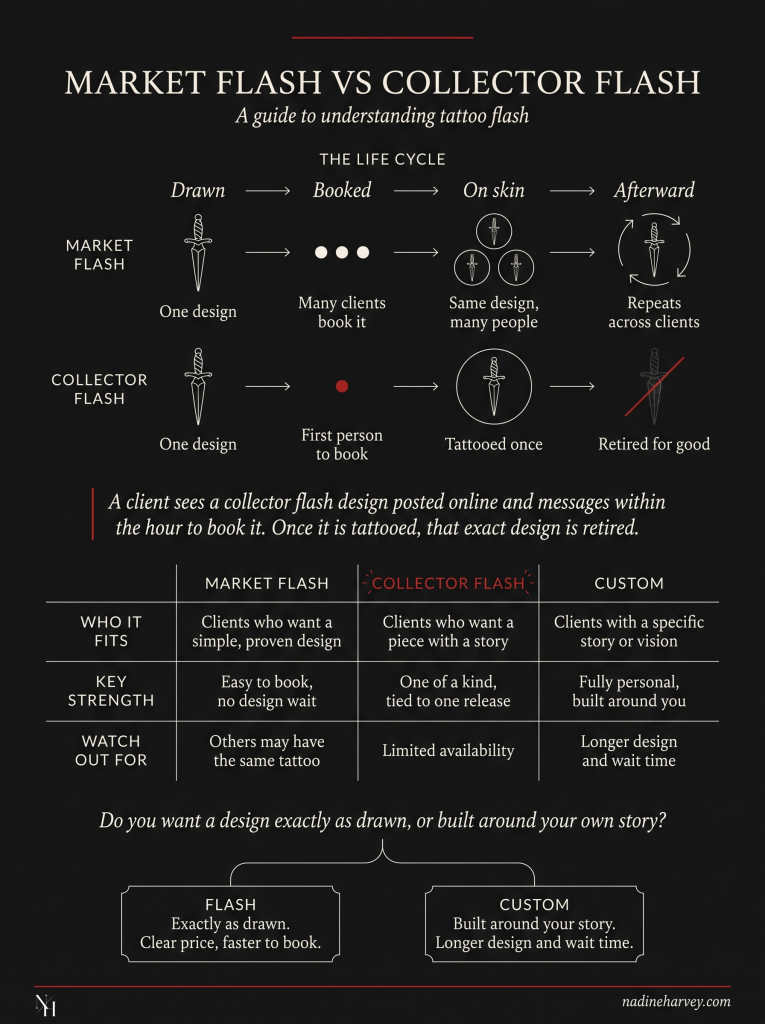
A client sees a collector flash design posted online. They message within the hour to book it. Once it is tattooed, that exact design is retired. No one else will get it after that.
If a repeated design bothers you, choose collector flash or move toward a custom piece. If you like the idea of a proven design done well, market flash is a straightforward choice.
Building a flash sheet follows five clear stages. An artist sketches rough shapes, refines the line work, sets bold outlines, applies flat color, then arranges the finished designs on one themed sheet. Every flash design still starts as a hand drawn sketch, whether the final version ends up on paper or an iPad screen.
Here is the process, broken into steps.
Hand drawn flash uses tracing paper, a light box, and Micron pens for line work, plus Copic markers or watercolors for color. Digital flash often moves through Procreate or vector illustration software. This lets a design resize cleanly for different body placements.
“I run every line through three passes before it goes on the sheet. That third pass is where the design earns its final shape.”
Nadine Harvey, Tattoo Artist
Traditional flash uses a bold, limited palette for a reason. Norman “Sailor Jerry” Collins helped set that standard.
He is widely quoted saying he was first to use purple, white, yellow, and blue in tattoo ink. He is also quoted saying “color is here to stay,” per Ultimate Tattoo Supply. That limited, deliberate palette still shapes how flash gets colored today.
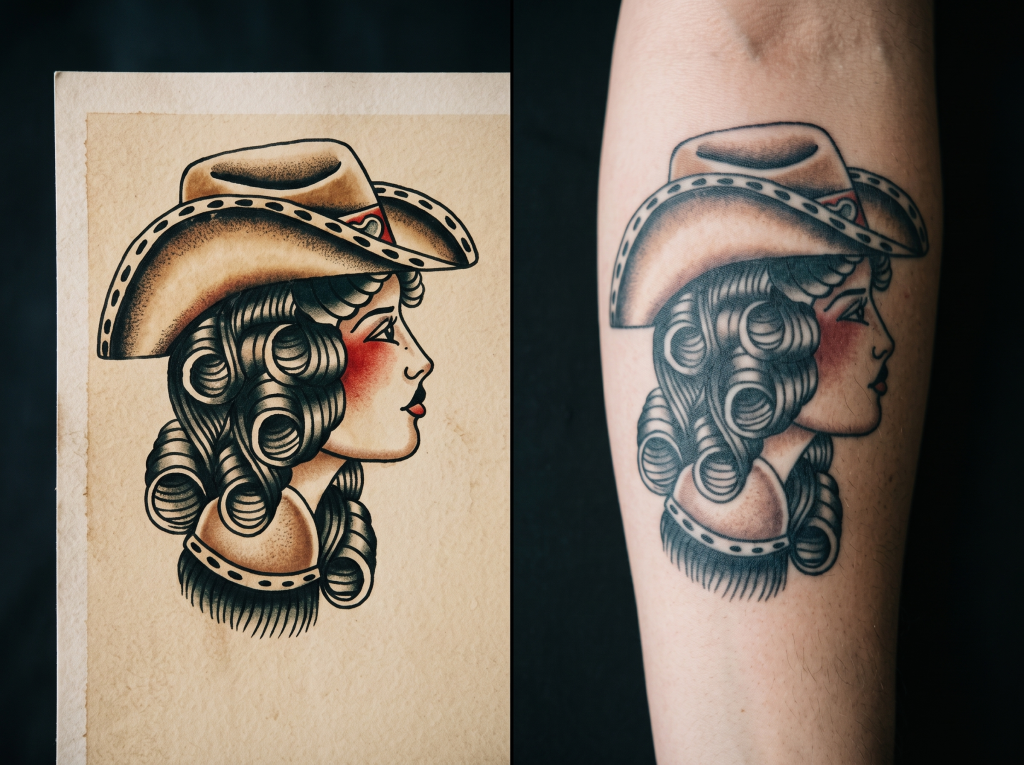
The tool changes. The standard does not. Every tattoo, flash or custom, is drawn by hand before ink touches skin. That step is what separates a considered design from a shortcut.
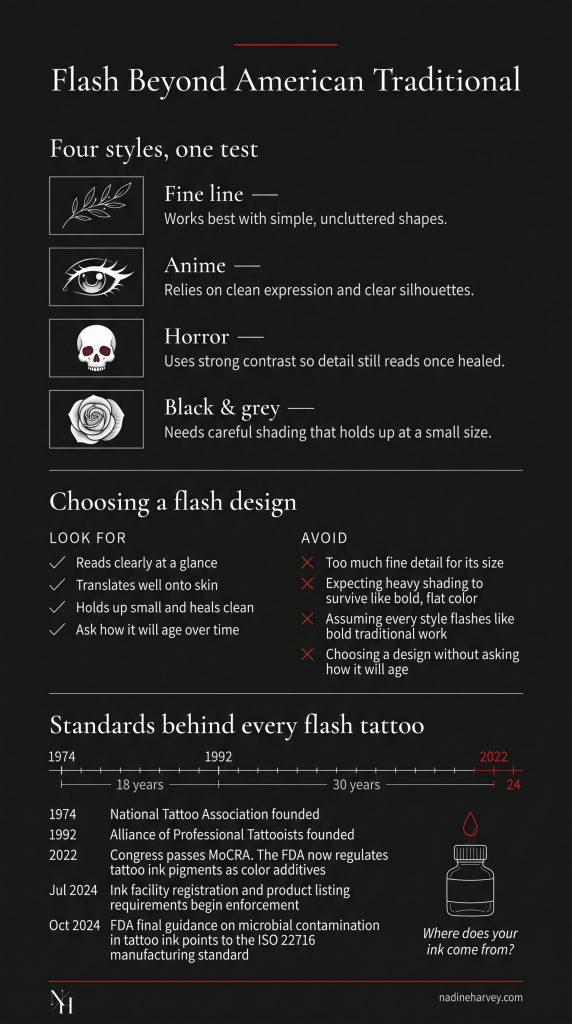
Most flash content online only shows bold, four color American traditional designs. Flash is not limited to one style. Fine line, anime, horror, and black and grey realism all work as flash, as long as the design holds up as a clean, repeatable piece.
A flash design needs to read clearly at a glance. It also needs to translate well onto skin. That standard applies to every style, from fine line to bold traditional work.
“My flash sheets move between black and grey, fine line, anime, and horror. The rule stays the same across every style. If a design cannot hold up small and heal clean, it does not go on the sheet.”
Nadine Harvey, Tattoo Artist
A flash day is a set date when an artist tattoos flash designs, often at a fixed rate, without the usual custom design timeline. It is not the only way to get flash work. Many artists release flash on a rolling basis and book it like a normal appointment.
Flash days work well for high volume shops. A private studio with limited monthly bookings often works differently. Flash pieces release in small batches instead of a single big event. Each batch still ties to open appointment slots.
| Option | Who It Fits | Key Strength | Watch Out For |
|---|---|---|---|
| Flash | Clients who like a design as shown | Clear price, faster to book | Less room for customization |
| Custom | Clients with a specific story or vision | Fully personal, built around you | Longer design and wait time |
Ask yourself one question first. Do you want a design exactly as drawn, or do you want it built around your own story? That answer points you toward flash or custom.
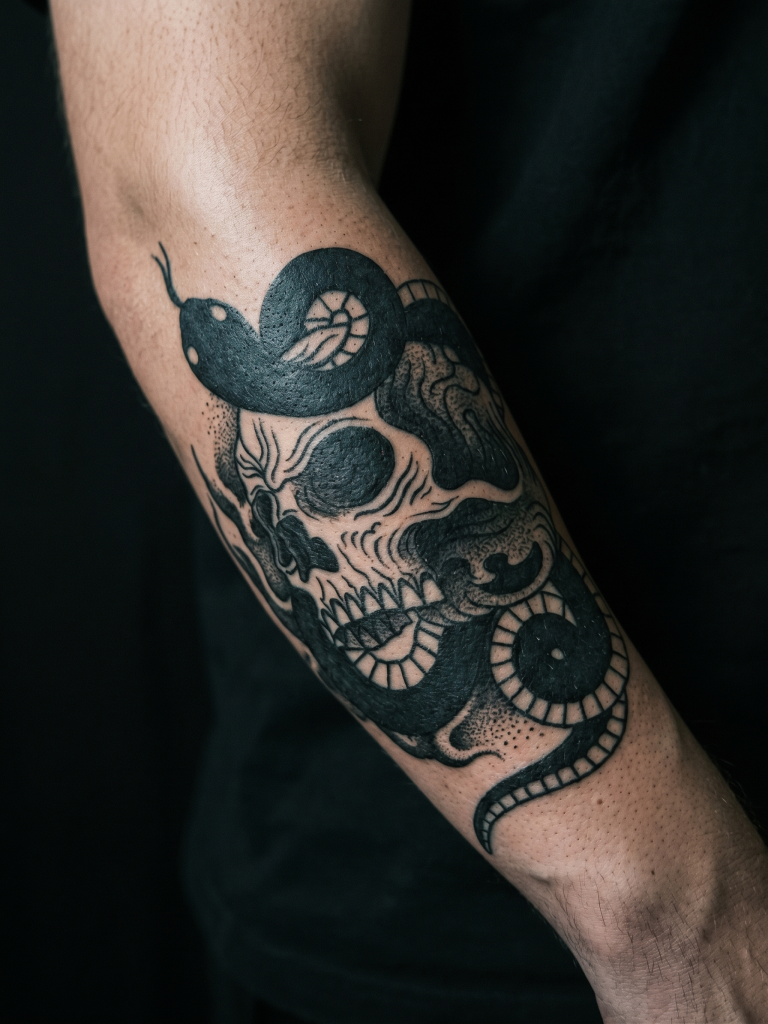
Flash tattoos follow the same ink and safety standards as custom work. The FDA now regulates tattoo ink pigments as color additives under the Modernization of Cosmetics Regulation Act of 2022, per a Congressional Research Service report. This gives every client a clear reason to ask an artist, flash or custom, where their ink comes from.
Regulation in this space has moved fast since Congress passed MoCRA in 2022.
Ask any artist where their ink comes from before you book. A studio that tracks its ink sourcing takes safety seriously, whether the design on the table is flash or fully custom.
Flash art is real, considered work. It is not a shortcut version of a tattoo.
The design still starts on paper or screen. It gets refined by hand. It follows the same safety standards as any custom piece.
Know the type of flash you are looking at, market or collector. Know the style you want, whether that is fine line, anime, horror, or black and grey. Then ask the artist how the ink is sourced and how the studio handles safety.
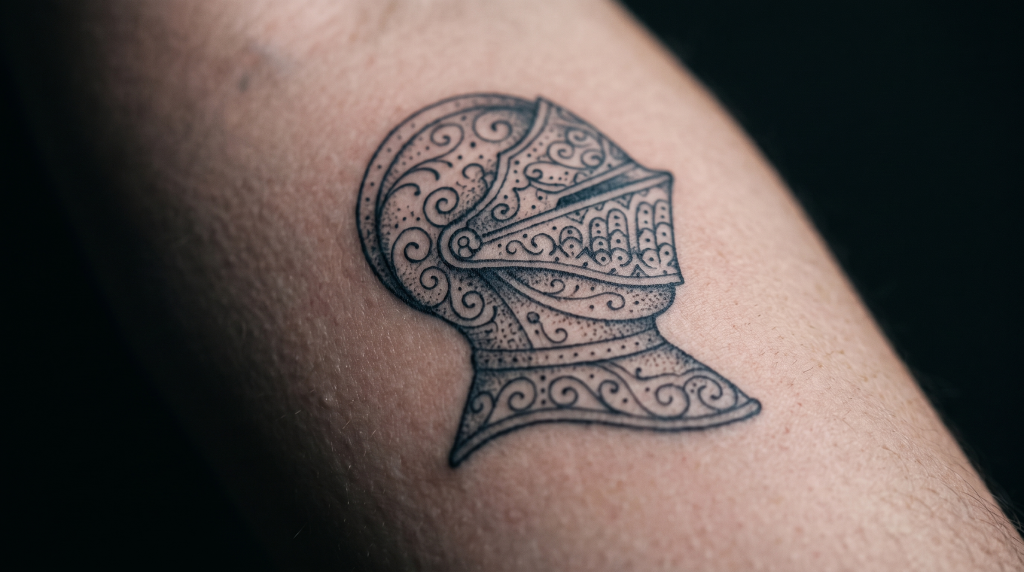
If you want to see how these ideas show up in real work, browse the tattoo portfolio or read more about the studio. When you are ready to talk through a design, you can book a consultation directly.
Often yes, since the design work is already done. Pricing still varies by artist, size, and detail.
Some artists allow small changes, like size or color. Ask before you book, since not every flash piece is open to edits.
Only if it is market flash. Collector flash is tattooed once, then retired for good.
Not because it is flash. Aging depends on line weight, placement, and aftercare, the same factors that affect any tattoo.
Yes. Flash is not limited to bold traditional work. Any style can work as flash if the design stays clean and holds up over time.