A working tattoo artist explains every major tattoo style, who each one suits, and how each one ages, so you can choose the right style before you book.
Most people cannot name the style they want. They save photos, describe a vibe, and hope the artist understands. That gap causes mismatched work and sometimes, regret.
This guide fixes that. You will learn what each major tattoo style looks like, who it suits, and how it ages. You will also learn how to choose one and how to find the right artist to do it.
Your style choice matters more than your design. The style sets how bold the lines are, how the ink ages, and which artist can execute it. A rose looks completely different in fineline, traditional, or black and grey realism. Choose the style first. Then the design, placement, and artist choice get easier.
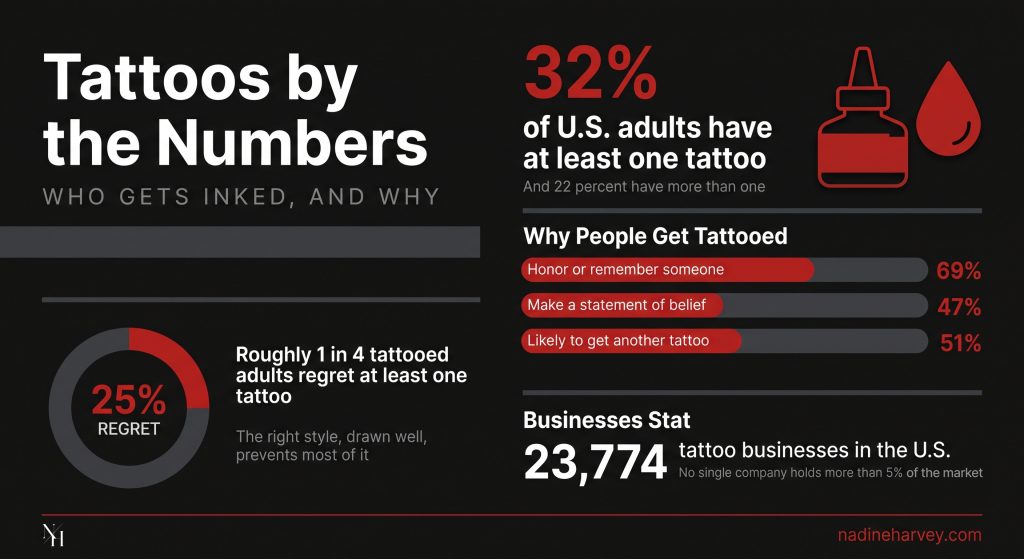
Style is not decoration. It carries meaning and message. In a Pew Research Center survey, 69 percent of tattooed adults said they got a tattoo to honor or remember someone. Another 47 percent got one to make a statement about what they believe.
The same survey found that 32 percent of U.S. adults have a tattoo. Tattoos are mainstream now. Eight in ten adults say society has grown more accepting over the past 20 years.
But there is a cost to choosing badly. About 25 percent of tattooed adults regret at least one tattoo. The right style, drawn well, is the best way to avoid that regret.
Take a simple subject like a wolf. In traditional style, it reads as a bold graphic with thick black lines. In black and grey realism, it looks like a photo. In fineline, it becomes a soft, delicate sketch.
Same subject. Three different tattoos. Three different aging paths. That is why the style comes first.
There are more than a dozen major tattoo styles. The core ones are American traditional, neo traditional, Japanese, black and grey, realism, fineline, micro realism, blackwork, illustrative, anime, and horror. Each has its own look, its own rules, and its own way of aging. Below is a plain guide to each, with who it suits.
American traditional uses bold black outlines and a limited color palette of red, green, yellow, and black. Think anchors, roses, daggers, and swallows. The style comes from early sailor tattoo culture.
It is the most durable style in tattooing. The thick lines hold their shape for decades. Who it suits: people who want work that still looks sharp in 40 years.
Neo traditional keeps the bold outlines of traditional but adds richer color, finer detail, and fuller scenes. It sits between traditional and illustrative work. Animals, portraits, and florals all fit well.
The bold outline foundation means it ages well too. Who it suits: people who love classic tattooing but want more depth and detail.
Japanese tattooing, or Irezumi, is one of the oldest and most refined styles in the world. It uses dragons, koi, snakes, tigers, and waves in large, flowing compositions. The motifs trace back to the Edo period, from 1603 to 1868.
Irezumi is built for large areas like sleeves, backs, and full bodies. The bold structure ages beautifully. Who it suits: people planning a large, connected piece with cultural depth.
Black and grey uses only black ink, diluted into grey washes to build shadow and depth. It can cover almost any subject. The one rule is simple. No color.
This is one of my core styles. Grey wash heals lighter than it looks fresh, so an artist has to plan for that. Who it suits: people who want depth and realism without color.
Realism looks like a photograph printed on skin. It demands mastery of light, shadow, and texture, usually without bold outlines. Portraits, animals, and nature scenes are the most common subjects.
Realism needs a true specialist. Not every skilled artist can do it well. Who it suits: people who want a lifelike portrait or scene and will research healed work carefully.
Fineline uses very thin, single-weight lines to create delicate, precise designs. Single needle work takes this to its limit, with lines as thin as a pen mark. It is elegant and close to drawing.
Here is the honest part. Fineline fades faster than bold styles because it holds less ink. Good placement, sun protection, and skin care keep it sharp. Who it suits: people who want subtle, refined work and will care for it.
Micro realism packs realistic detail into a tiny space, often no larger than a coin. Small portraits, pets, and objects rendered with shadow and depth. It takes exceptional skill at that scale.
It looks stunning fresh, but the tightest details can soften over years. High contrast and careful placement help it last. Who it suits: people who want a small, technical, high-impact piece and accept future touch-ups.
Blackwork uses solid black ink alone, with no color or grey. It ranges from bold geometric shapes to dense illustrative scenes and ornamental patterns. The heavy black holds up over time.
Blackwork pairs well with geometric and ornamental designs. It works from small accents to full sleeves. Who it suits: people who want a striking, high-contrast look that ages with strength.
Illustrative work looks like it came off a sketchpad or a canvas. It blends techniques from etching, drawing, and painting. Many artists build their own signature look inside this style.
It is one of the most flexible styles in tattooing. Who it suits: people who want art that feels personal and hand-drawn rather than photographic.
Anime tattoos bring characters and scenes from Japanese animation to skin. They can use bold color, clean line, or soft shading depending on the source. This is one of the styles I love to work in.
Anime work rewards clean lines and good reference. Who it suits: fans who want a favorite character rendered with care and accuracy.
Horror tattoos lean into the dark and the eerie. Think unsettling portraits, creatures, and cinematic scenes. The style often blends realism, black and grey, and illustration.
Horror needs contrast and mood, not just detail. Who it suits: people drawn to dark, editorial imagery who want a piece with atmosphere.
Several other styles round out the field. Each has a clear look and audience.
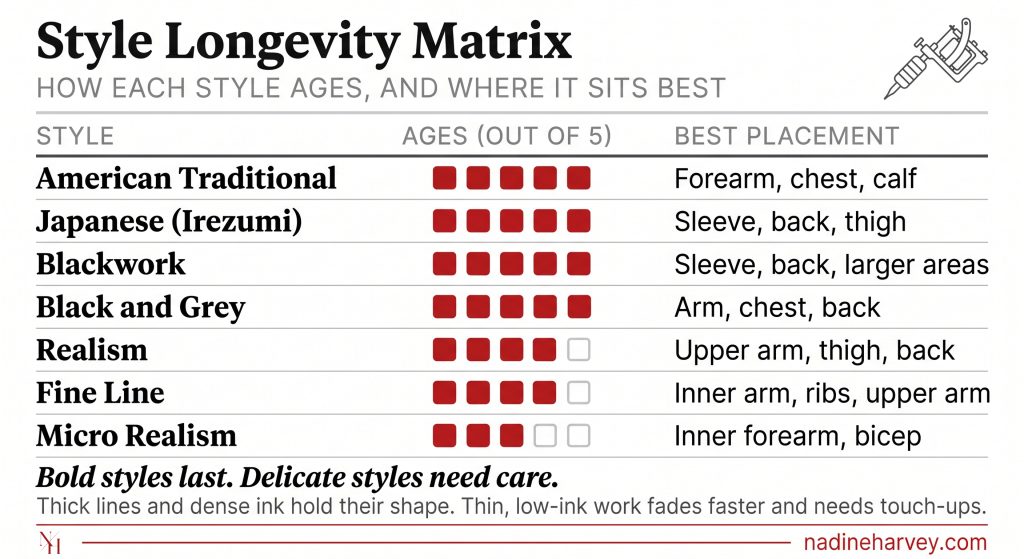
Here is a quick comparison of the most requested styles. Use it to match a style to your goals for aging, color, and placement. Bold styles favor longevity. Delicate styles favor detail and subtlety. Neither is better. They just serve different ideas.
| Style | Who It Suits | How It Ages | Best Placement |
|---|---|---|---|
| American Traditional | Wants lifelong clarity | Excellent, ages 40 plus years | Forearm, chest, calf |
| Japanese (Irezumi) | Wants a large connected piece | Excellent with bold structure | Sleeve, back, thigh |
| Black and Grey | Wants depth without color | Very good | Arm, chest, back |
| Realism | Wants a lifelike portrait | Good with a specialist | Upper arm, thigh, back |
| Fineline | Wants subtle, delicate work | Fades faster, needs care | Inner arm, ribs, upper arm |
| Micro Realism | Wants small, technical detail | Softens over time | Inner forearm, bicep |
| Blackwork | Wants bold, high contrast | Excellent | Sleeve, back, larger areas |
Bold styles age best. Traditional, blackwork, Japanese, and neo traditional hold their shape for decades because they use thick lines and dense ink. Fineline, micro realism, and watercolor fade faster because they hold less pigment and rely on thin detail. Placement, sun exposure, and skin care decide how well any style lasts.
Every tattoo changes over time. Skin renews itself, and ink settles and spreads a little. The question is how visible that change is.
Bold work hides aging well. Thin work shows it. A hairline fineline can soften into a slightly wider mark over ten years. That is normal, not a failure.
There is a fair debate here. Some artists argue that fineline fading comes from poor technique or sun damage, not the style itself. There is truth in that. Clean needle depth and steady lines make a real difference in how thin work holds up.
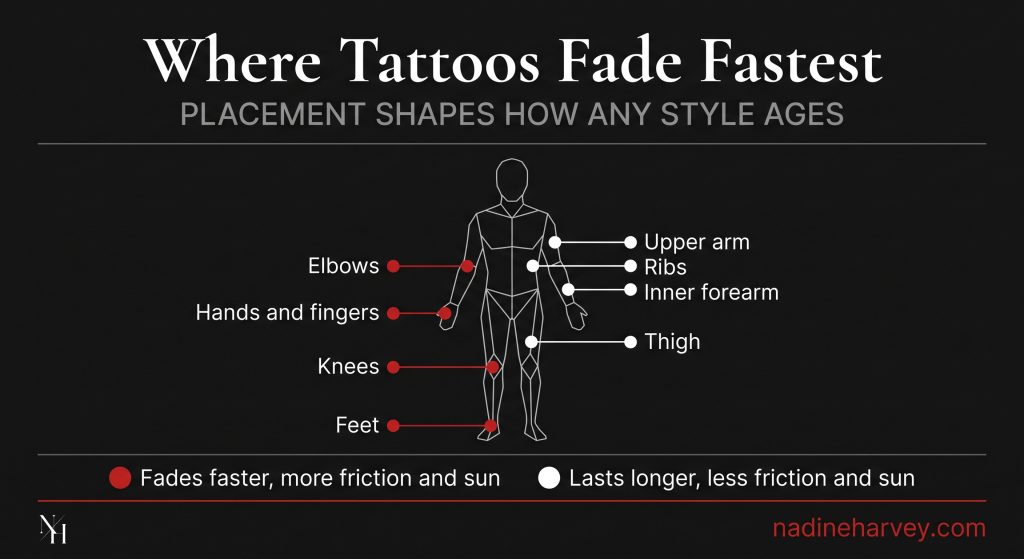
Placement matters just as much. High-friction and high-sun areas fade fastest.
“I keep fineline off fingers and feet, because those spots blur first. On an inner forearm, a thin line can stay crisp for years.” Nadine Harvey, Tattoo Artist
The single biggest factor you control is sun. The American Academy of Dermatology guidance recommends SPF 30 or higher on healed tattoos, reapplied every two hours outdoors. That one habit protects any style.
These are the two real decisions most clients face. Black and grey gives depth, mood, and strong aging. Color gives vibrance but can ask for more upkeep. Bold work lasts longer and reads from a distance. Fineline looks delicate and personal but needs more care. Your subject and your lifestyle should guide the call.
Black and grey suits realism, horror, and moody portraits. It ages cleanly and pairs well across a collection. Color suits traditional, neo traditional, and bright illustrative work.
Modern color inks last longer than they used to. Still, color can call for touch-ups sooner than solid black. Think about how much upkeep you want before you choose.
“With black and grey I pack the grey wash a shade darker than it looks fresh. It heals lighter, so I plan the values for how it will look in a year.” Nadine Harvey, Tattoo Artist
Fineline is subtle. It works for small, personal pieces and delicate botanicals. Bold work stands out. It holds up for decades and stays clear from across a room.
Ask yourself one question. Do you want something subtle that you protect carefully, or something strong that you rarely think about? Your honest answer points to the right choice.

Choose your style in four steps. Start with your subject, then decide bold or delicate, then pick color or black and grey, then match placement to aging. This order keeps you from falling in love with a design that will not last where you want it. Style first, design second, always.
Follow these steps in order.
Custom work is the norm, not the exception. Custom-designed tattoos make up about 59 percent of tattoo industry revenue. A good artist draws your piece by hand for you. As I have said before, each design is something a client “will only get one piece of that artwork” from, because it is made for them alone.
A few mistakes cause most style regret. Watch for these.
Tattoos are rarely a one-time event. In an AARP survey, 51 percent of tattooed adults said they are extremely likely to get another. Think about how your first piece fits the collection you may build.
Match the artist to the style. No artist does every style well. Look for a portfolio that is mostly your chosen style, and study healed photos, not just fresh ones. In a fragmented field, the right specialist is the single biggest factor in how your tattoo turns out. A great fine line artist is often a poor choice for bold Japanese work, and the reverse is true too.
The market is huge and scattered. There are about 23,774 tattoo businesses in the United States, and no single company holds more than 5 percent of the market. That means quality varies widely from chair to chair.
So vetting matters. Use this short checklist before you book.
Healed photos are the real test. Fresh work can hide overworked lines and weak ink retention. Work that still looks clean a year later tells you the truth.
The care behind the work matters as much as the skill. I genuinely care about my work, and the artists worth booking feel the same about theirs. You can see it in a focused tattoo portfolio and in how an artist talks about aging and aftercare.
In 2026, fineline, micro realism, and bold blackwork lead the trends, along with a return to clean, high-contrast linework. But trends fade and timeless styles stay. Traditional, Japanese, and blackwork remain the safest long-term bets. Choose a trend if you love it, but know how it will look in ten years before you commit.
Trends shape what people ask for right now. Fineline florals and delicate script stay popular. Micro realism keeps growing. Bold blackwork with fine detail is very popular right now.
There is also a clear shift back to clarity and contrast after years of soft, minimal work. Clients want tattoos that are intentional and well executed, not just small or viral.
But trend is not the same as lasting. Some styles never really trend. They just stay good.
Pick a trend if it speaks to you. Just judge it by how it ages, not by how it looks on a feed today.
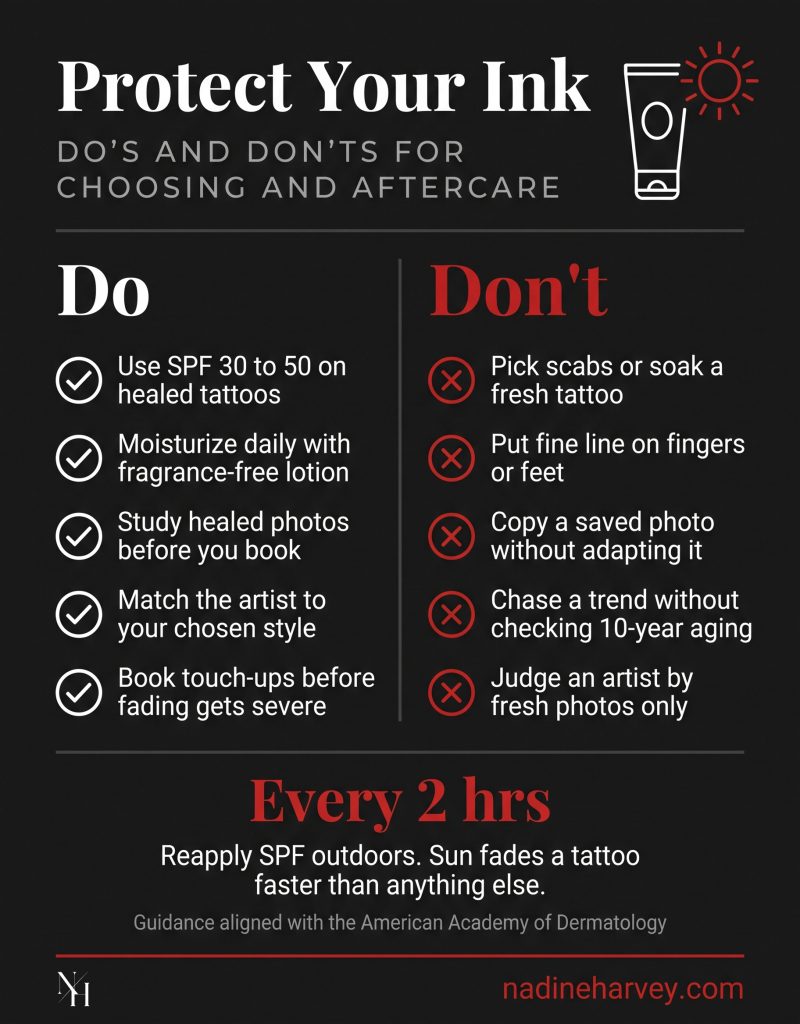
Good aftercare protects every style. Follow your artist’s instructions, keep the tattoo clean and moisturized while it heals, and protect it from the sun for life. Fresh healing takes about two to four weeks. Sun protection is the one habit that keeps any style crisp for years. It matters most for fine line and color work.
Healing has two phases. The surface heals in about two to four weeks. The deeper skin settles over a few months.
During healing, keep it simple. Wash gently, moisturize lightly, and never pick at scabs. Avoid soaking the tattoo and keep it out of direct sun.
“The clients whose work still looks sharp are the ones who use SPF 50 and a fragrance-free lotion every day. Sun fades a tattoo faster than anything else.” Nadine Harvey, Tattoo Artist
Aftercare advice varies more than people think. A review of 700 U.S. aftercare instructions found that artists often base advice on personal experience rather than medical wound care. So follow a trusted artist and sound guidance, not random posts.
For the long run, three habits do most of the work.
You now have a clear map of every major tattoo style. You know how each one looks, who it suits, and how it ages. That knowledge changes how you plan a tattoo.
Start with the style, not the picture. Decide bold or delicate, color or black and grey, then match the placement to how you want it to age. Bold styles reward you with longevity. Delicate styles reward you with subtlety, as long as you care for them.
The last step is the artist. Find a specialist in your chosen style, study their healed work, and talk through your idea before you commit. When you are ready to plan a custom piece, you can book a consultation and bring your reference and questions.
Fineline, micro realism, and bold blackwork lead current demand. Fineline stays strong for small, delicate pieces. Blackwork is growing for larger, high-contrast work.
American traditional lasts the longest. Its thick lines and dense color hold their shape for decades. Japanese and blackwork also age very well.
Yes, fineline tattoos fade faster than bold styles. They hold less ink, so thin lines soften over time. Good placement, sun protection, and daily moisturizing slow the fading.
Choose black and grey for depth, mood, and strong aging. Choose color for vibrance and bold traditional or illustrative work. Color may need touch-ups sooner than solid black and grey.
Look for a portfolio that is mostly your chosen style. Study healed photos taken months after the session. Consistent lines and repeat clients are strong signs of a good match.
Fineline uses thin, clean lines to create simple, elegant designs. Micro realism packs shaded, photo-like detail into a tiny space. Fineline focuses on clarity, while micro realism focuses on realistic detail.